Authentic Gratitude is Rooted in a Humble Heart
As Thanksgiving approaches, I find myself reflecting on the difference between the holiday itself and the simple act of “giving thanks.” For many, Thanksgiving is a time for gathering around the table and connecting with family and friends while enjoying traditions like parades, football, and our favorite foods.
Yet Thanksgiving often feels brief - a momentary pause before the shopping frenzy of Black Friday and Cyber Monday - a day increasingly overshadowed by the rush of commercialism.
So, if Thanksgiving is truly about “giving thanks,” when does that actually happen?
For some, it’s a prayer before the meal or a tradition of sharing what they’re most grateful for. Others may find it in quiet moments of reflection, appreciating their blessings or contemplating the growth and lessons learned from life’s challenges.
But why does our focus on gratitude seem to fade so quickly? Life’s demands, constant distractions, and a tendency to overlook everyday blessings make it difficult to sustain a lasting mindset of gratitude.
This is where humility takes center stage. Gratitude is a humility-based mindset.
Unlike pride, which can be self-centered or ego-driven, a humility-based mindset requires recognizing and appreciating the value of what we have received - whether from others, circumstances, or God - rather than taking those blessings for granted or feeling entitled to them. Without humility, gratitude can come across as superficial or incomplete, lacking sincerity.
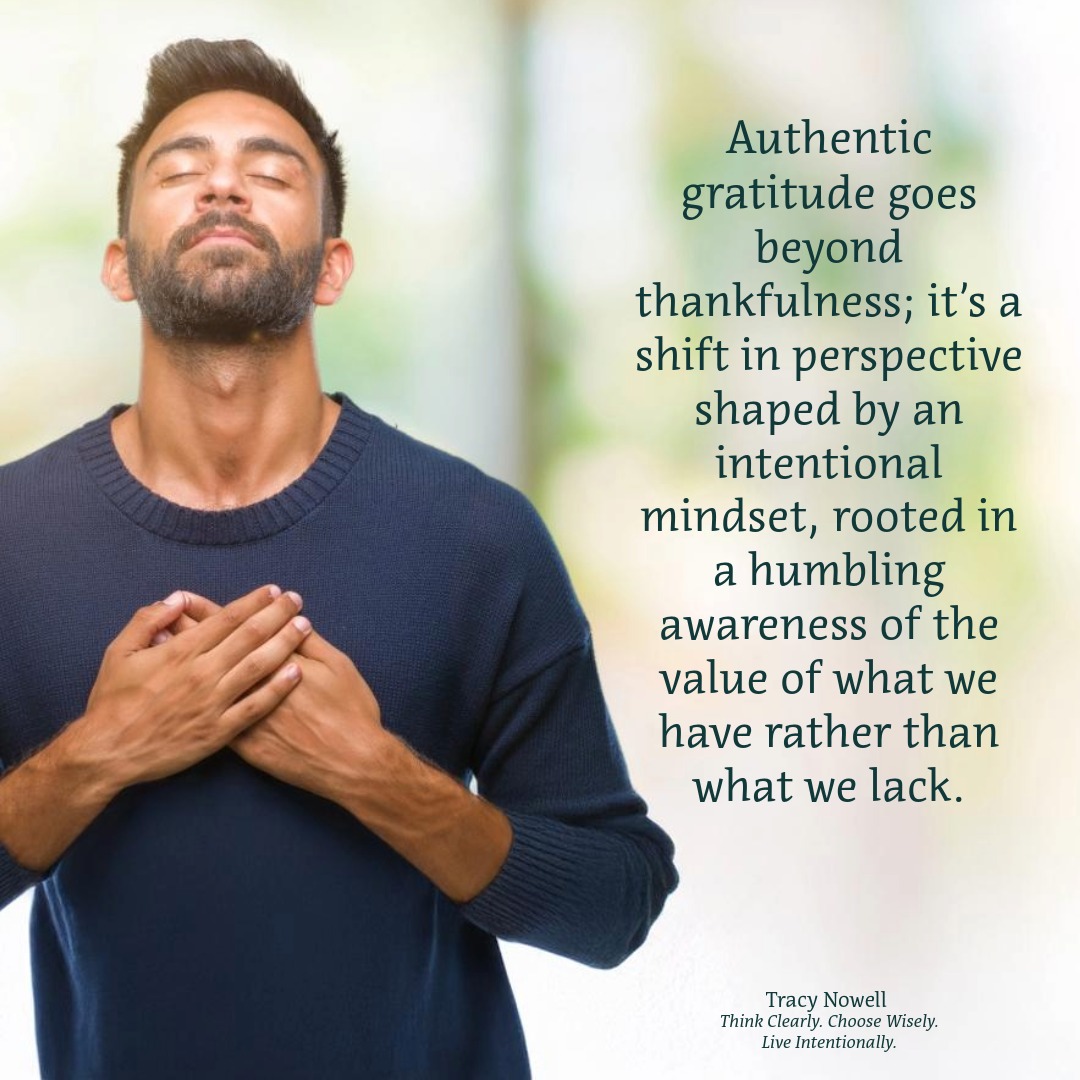
Authentic gratitude goes beyond thankfulness; it’s a shift in perspective shaped by an intentional mindset, rooted in a humbling awareness of what we have rather than what we lack.
What if we could cultivate a mindset of gratitude that transforms temporary thankfulness into a lasting, authentic way of life? Imagine how your mental outlook, relationships, and life might improve if gratitude were not a fleeting feeling but an integral part of who you are.
Transforming Gratitude Into a Way of Life
For gratitude to become more than a fleeting feeling, it requires consistent effort and an intentional mindset that reshapes how we see ourselves and the world around us. Here are five thoughts to consider for transforming gratitude into a way of life -
- Gratitude Begins With a Choice
Gratitude is intentional. It’s a conscious decision to focus on what we have rather than fixating on what we lack. Simple practices like journaling, expressing appreciation or pausing to reflect on our blessings - even during challenging moments - can help make gratitude a natural part of our daily lives.
Practicing gratitude fosters a sense of abundance and contentment, transforming unhelpful emotions into habits that strengthen relationships and support personal growth.
Ask Yourself:
- How often do you intentionally focus on what you’re grateful for, especially during busy or challenging times?
- What small habit could you introduce today to make gratitude a more consistent part of your life?
- Gratitude Requires Awareness and Humility
Gratitude thrives on awareness - truly noticing and valuing the blessings in our lives. Humility empowers us to overcome the attitude that “the world revolves around us” and accept circumstances beyond our control.
As C.S. Lewis said, “Humility is not thinking less of yourself but thinking of yourself less.” A grateful mindset rooted in humility acknowledges our interconnectedness and builds appreciation for the roles others play in our success.
In contrast, pride and self-reliance can hinder gratitude, making it harder to appreciate the contribution of others or the favorable circumstances that influence our success. A humility-based mindset broadens our perspective, enabling us to see life as a collaboration of effort, kindness, and opportunity.
Ask Yourself:
- Are you truly aware of the blessings in your life, or do you find yourself rushing past them without noticing?
- How might embracing humility deepen your gratitude for what you’ve received from others or through beneficial circumstances beyond your control?
- Gratitude Shifts the Focus From What We Lack to What We Have
Gratitude and abundance go hand in hand. A grateful mindset allows us to see the value in what we already have, countering the constant striving and comparison often created by a scarcity mindset.
As Zig Ziglar wisely noted, “The more you express gratitude for what you have, the more likely you will have even more to express gratitude for.” Gratitude reframes life, helping us embrace sufficiency and fulfillment rather than dwelling on what’s missing.
Ask Yourself:
- Do you focus more on what you have or what you feel you lack? How does this impact your sense of contentment?
- What might change if you consistently approached life with an abundance mindset instead of a scarcity mindset?
- Gratitude Enriches Both the Giver and Receiver
Gratitude deepens our connections with others. Expressing appreciation not only makes others feel valued but also enhances our own sense of purpose and satisfaction. Acts of gratitude - whether a heartfelt “thank you” or a thoughtful gesture of kindness - can strengthen trust and build stronger bonds in personal and professional relationships.
Ask Yourself:
- When was the last time you expressed genuine gratitude to someone? How did it affect them—and you?
- What opportunities do you have right now to show your gratitude in a meaningful way?
- Gratitude Extends Beyond Thanksgiving
Genuine gratitude should not be confined to a single day or occasional moments of reflection. It’s a lens through which we view the world, allowing us to find meaning and connection even in life’s challenges.
Marcus Tullius Cicero called gratitude “the parent of all virtues.” When practiced regularly, gratitude becomes a cornerstone of our approach to life, shaping our decisions with grace and humility.
Ask Yourself:
- How can you carry the spirit of Thanksgiving into your daily life, making gratitude a consistent practice rather than a seasonal tradition?
- What specific steps could you take to incorporate gratitude into your work, relationships, or routines year-round?
Final Thoughts
Gratitude is more than a fleeting emotion; it is a transformative mindset that shapes how we live, work, and connect with others. As Paul writes in 1 Thessalonians 5:18, “Give thanks in all circumstances, for this is God’s will for you in Christ Jesus.” This verse reminds us that gratitude is not limited to moments of joy or abundance but extends to every season of life, strengthening trust in God’s provision and providing a sense of peace.
For those struggling to develop this mindset, coaching can help build awareness, reframe challenges, and establish intentional habits that make gratitude an authentic and integral part of life.
Authentic gratitude begins with a humble heart. By embracing humility, we can live out the call to give thanks in all circumstances, transforming gratitude from a fleeting feeling into a way of life that brings contentment, resilience, and fulfillment while positively influencing those around us.