Examine the Wake: Discerning Trustworthiness
Do you naturally trust people, or feel they deserve some level of trust before you know much about them?
Conversely, do you find it difficult to trust others, even those closest to you?
Trust plays a central role in our lives. It affects our marriages, families, friendships, workplaces, businesses and how we interact with those we know very little about. It influences whom we listen to, seek advice or counsel from, choose to follow, entrust with responsibility and place our confidence in.
This raises an important question.
How do we determine whether a person is trustworthy?
From my perspective, the highest compliment I can give someone is telling them, “I trust you.” But it is not a blind or wishful trust. It is a trust that has been earned.
Early in life, it became apparent that many people say one thing and then do another. Life also taught me that I couldn't expect people to trust me if I did the same.
I also learned that repeated inconsistencies between a person's words and actions should not be ignored. Those inconsistencies become evidence that helps us discern whether a person is trustworthy.
While I do consider the opinions of others, I prefer to "read" people myself, having learned that others' perspectives might sway my thinking unjustifiably in one direction or the other.
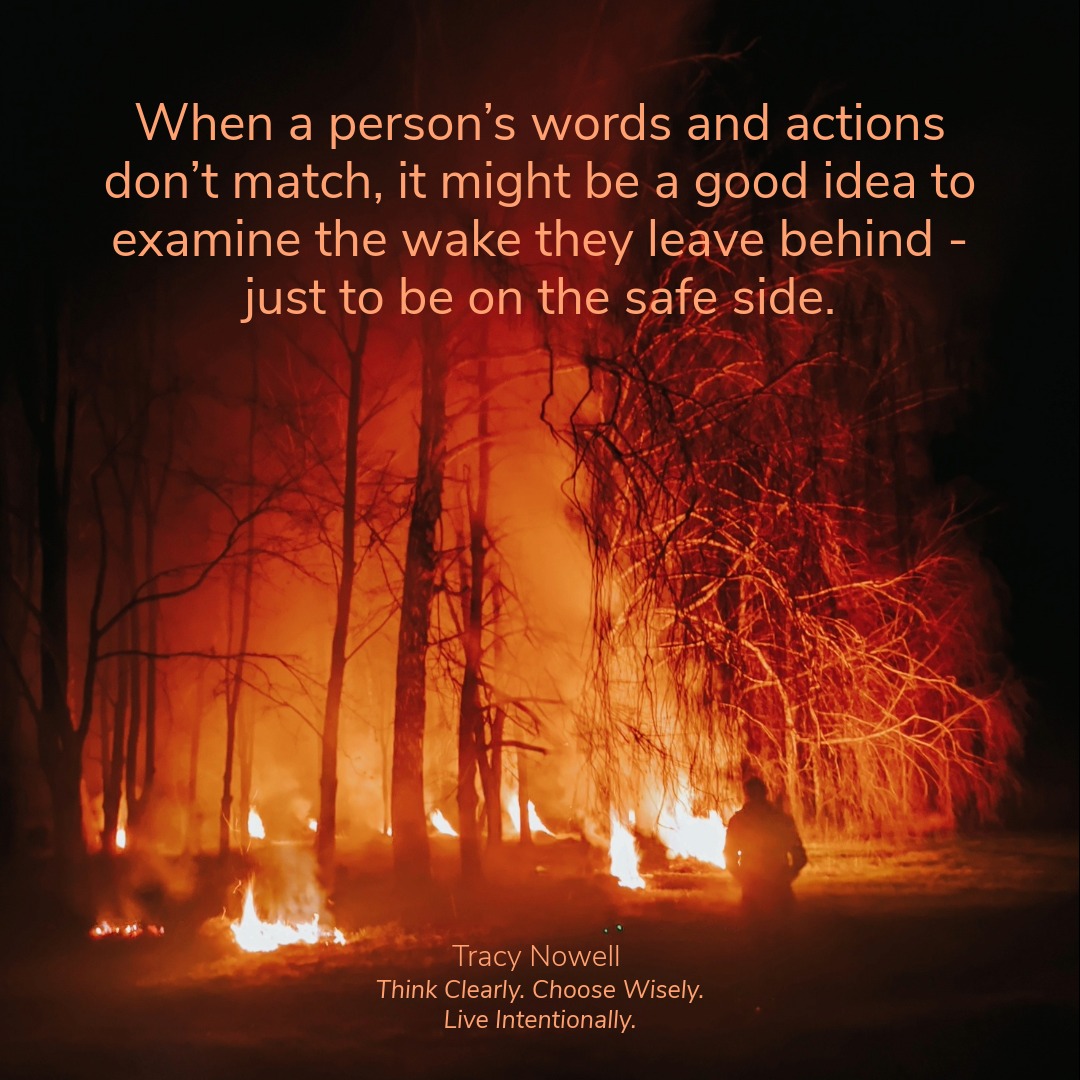
Those experiences taught me to examine the wake people leave behind because trust requires more than just words or the opinions of others.
Two Ways We Decide Whom to Trust
Before we can determine whether another person is trustworthy, we first have to consider how we make that judgment. Over the years, I have observed two general but very different approaches.
1. Our Own Perspective
One approach begins with ourselves - our experiences, beliefs, values, assumptions and expectations. We tend to project those onto other people.
If we are generally honest, we may naturally expect honesty in others. If we keep our commitments, we may assume they will as well. However, someone who has experienced repeated betrayal may find it difficult to trust almost anyone.
I have also found that those with a track record of dishonesty or deception are often suspicious of others and tend to assume others will think and behave much as they do. What seems normal to them is assumed to be the norm for others.
While these reactions are understandable, they tell us more about ourselves than they do about the person we are evaluating.
In each case, the judgment originates primarily from the perspective of the person making the judgment rather than the facts about the other person’s life.
2. The Other Person’s Life
The second approach primarily focuses on the other person’s life rather than our own perspective.
Instead of relying primarily on assumptions, impressions or limited personal experiences, I have found it more reliable to carefully observe what another person’s life consistently reveals.
Words matter because they communicate intentions, commitments, and assurances. But words alone are not enough to establish trust. Actions matter because they either confirm or contradict those words. Even more important are repeated actions, because they form patterns. Those patterns gradually reveal character.
This is what I mean when I say, “Examine the wake.”
That wake contains evidence of how we treat people, keep commitments, handle responsibility, and conduct ourselves over time.
For me, this is the most reliable way to evaluate trustworthiness - by carefully observing another person's words, actions, and patterns of behavior.
Starting From Neutral
Of course, we don't always know much about another person. In most cases, we don’t need to because our interactions are brief and may never extend beyond that moment.
That said, when we first meet someone, we often see only the side of them they want us to see. First impressions may be helpful, but they often fail to tell the whole story.
With people I interact with regularly, and especially those who become part of my personal or business life, I prefer to reserve judgment.
My personal trust meter begins at neutral.
I don't begin with trust or distrust. I begin with suspended judgment.
For me, trust must be earned. I also believe I am equally responsible for earning the trust of others.
The experiences and observations of people I already trust might influence my initial impression of others, but I still assume primary responsibility for discerning trustworthiness based on what I personally observe and experience.
Why?
Since I consider "I trust you" the highest compliment I can give someone, saying it before trust has been earned strips those words of their significance.
Trust: Hard to Earn, Easy to Lose
Trust is not earned primarily by what people say about themselves, nor by what others say about them. It is earned through what a person's life consistently demonstrates.
Trust grows slowly. Trust is difficult to earn because it is built gradually through consistent evidence of trustworthiness. As confidence in another person's character and judgment increases, relationships tend to improve. Communication becomes more open. People are more willing to extend grace, seek our advice, delegate important responsibilities, and follow our leadership because experience has taught them our words can generally be believed.
Trust can also diminish quickly. Repeated broken promises, neglected responsibilities, or poor judgment increasingly weaken confidence in a person. Relationships become more guarded while perceived unreliability limits opportunities, and rebuilding trust often requires far more time than earning it in the first place.
Trust can be lost instantly. A single act of significant betrayal, deception, or unfaithfulness can destroy years of earned trust in a single moment. Although forgiveness may be freely given, rebuilding trust requires renewed evidence of trustworthiness. And in certain circumstances, it is virtually impossible to regain someone’s trust.
Trust is conditional because it should be supported by evidence.
Trust Requires Character, Not Just Competence
We can develop confidence in a person’s competence, yet still not trust their character.
A highly competent person may possess exceptional talent, intelligence, or skill yet still misuse those abilities if integrity or truthfulness are lacking.
There are, however, legitimate times when we cannot disclose everything we know because of legal, fiduciary, or confidentiality obligations. That is different from intentionally withholding important information or creating a misleading impression.
A person can be selectively honest while only being partially truthful. By carefully choosing which truths to reveal and which to withhold, they create an impression that does not accurately reflect reality. They may answer the question they were asked while intentionally withholding information that causes others to draw conclusions they would not reach if they knew the whole truth.
And it's often not just our truthfulness, but also whether our actions and conduct affect the people around us in helpful or harmful ways.
Character matters more than competence.
Warren Buffett is quoted as saying,
"Somebody once said that in looking for people to hire, you look for three qualities: integrity, intelligence, and energy. And if you don't have the first, the other two will kill you."
Over the years, I have found it difficult to "coach up" people with significant character flaws. Often, change is not possible unless the consequences of those flaws become too serious to ignore - whether through damaged relationships, lost opportunities, diminished trust, or other painful outcomes.
That does not mean people cannot change.
When I think about my own life, I experienced consequences in my twenties that became too significant to ignore. They forced me to confront the growing gap between what I believed and the life I was living. That became the catalyst for bringing my life into consistent alignment with my beliefs and values.
However, trust is not restored simply because someone says they have changed. It is rebuilt as the consistent alignment of their words, actions, choices, and patterns provides evidence of that change.
Final Thoughts
Many times in life I have heard people say, "Trust me on this."
When those words come from someone I don't know well, they are a yellow flag. My first thought is usually, "Why should I trust you?"
Personally, I would rather say, "Test me on this. Let me earn your trust."
That shifts the responsibility from telling someone else to trust us to demonstrating that we are worthy of their trust. The more trust we earn, the less we should feel the need to say, “Trust me.”
“There are many who say, ‘You can trust me!’ But can they be trusted?” - Proverbs 20:6 (CEV)
Trust is also a two-way responsibility. We are responsible for discerning whom we can trust, and equally responsible for living lives worthy of others' trust.
Consider these Proverbs -
"Whoever walks in integrity walks securely, but whoever takes crooked paths will be found out." - Proverbs 10:9 (NIV)
"The integrity of the upright guides them, but the unfaithful are destroyed by their duplicity." - Proverbs 11:3 (NIV)
"The Lord detests lying lips, but he delights in people who are trustworthy." - Proverbs 12:22 (NIV)
Notice Solomon’s descriptions - a person's walk, the paths they take, their integrity, unfaithfulness, duplicity, lying lips, and trustworthiness. All are observable in our words, actions, patterns, and character.
So, consider the following questions when discerning the character of others. They are equally worth asking of ourselves.
- Do their actions consistently match their words?
- Do their patterns consistently reflect the character they profess?
- In what ways have they proven themselves to be truthful, trustworthy and a person of integrity - or not?
The wake we leave behind is more than the record of what we have done - it is the testimony of the life we have chosen to live.
That is why I say, "Examine the wake."
“Whoever can be trusted with small things can also be trusted with big things. Whoever is dishonest in little things will be dishonest in big things too.” - Luke 16:10 (ERV)
If you’d like to connect, I’m here to listen. No pressure—just a conversation.