The Impact of an Intentionally Lived Life
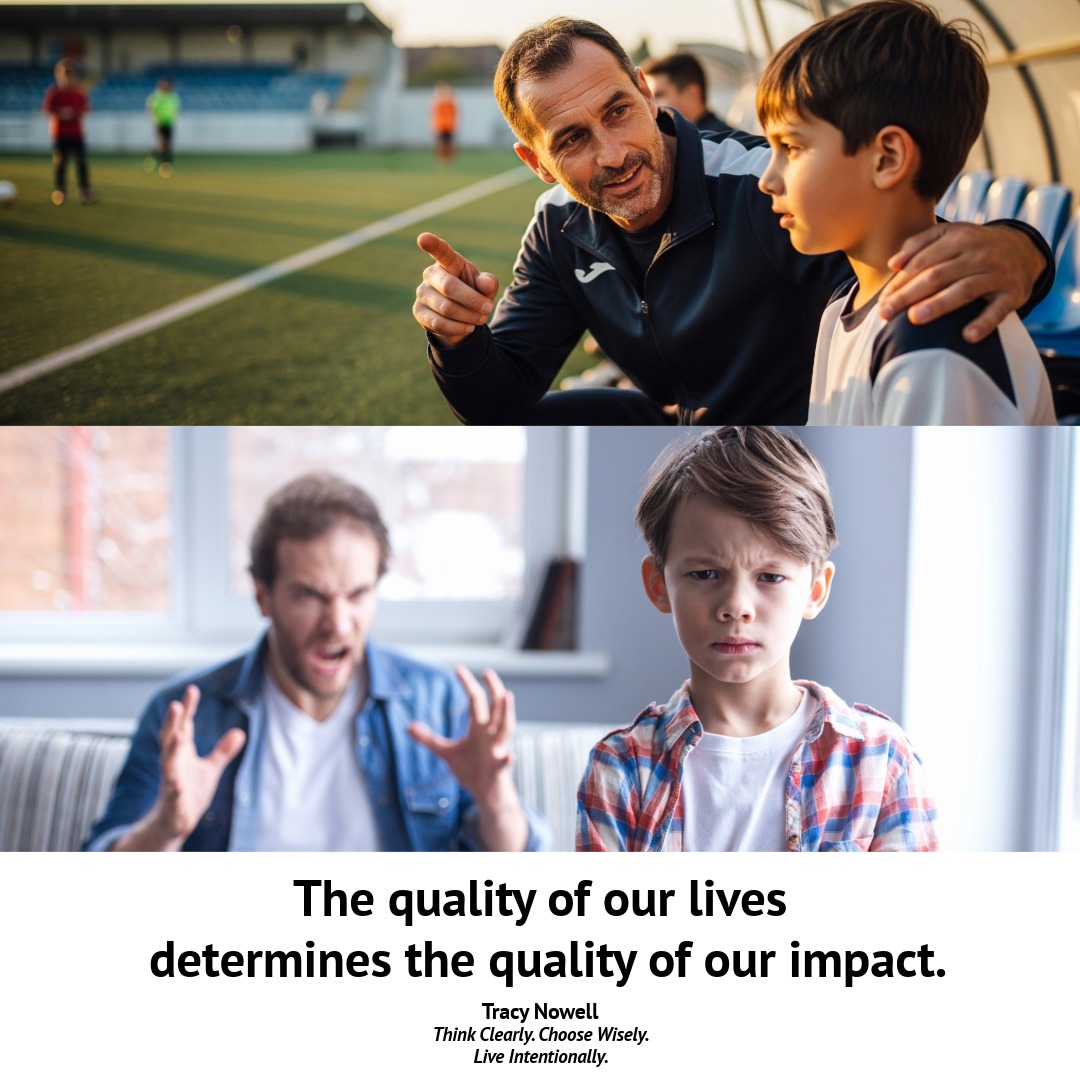
Whether we think about it or not, every life leaves an imprint.
Day by day, through our conversations, decisions, activities, relationships, and responsibilities, we influence the people around us. Sometimes the effect of that influence is immediately visible. More often than not, we never see the full impact our lives have on others.
If you've lived very long, you've probably noticed that some people consistently leave people and situations better than they found them. They build trust, strengthen relationships, solve problems, lead with integrity, and faithfully steward the opportunities and responsibilities entrusted to them. Others, despite possessing many of the same abilities and opportunities, leave behind strained relationships, broken trust, unnecessary conflict, missed opportunities, and problems that continue long after they are gone.
Every life has an impact. Whether our influence extends only to those we know personally or reaches people we may never meet, the question is not whether our lives will influence others, but what kind of impact they will have.
So, what determines the nature of the impact our lives have?
At first glance, some might say the answer lies in talent, intelligence, personality, charisma, wealth, fame, or ability to market ourselves. Certainly, those things influence what we are capable of doing and may determine the opportunities available to us.
Yet they do not fully explain why two people with similar advantages often affect people and situations in profoundly different ways.
I came to believe that the nature of our impact is largely determined by the quality of the life we choose to live. The outcomes of that choice are reflected in our own lives and in the impact we have on others.
That conviction grew out of years of observing life, reflecting on my own experiences, and noticing that people with similar abilities and opportunities often produced very different outcomes.
What Determines the Quality of Our Lives?
If the nature of our impact is largely determined by the quality of the life we choose to live, an equally important question is this -
What determines the quality of our lives?
I’ve come to the conclusion that the quality of our lives is determined by what we believe, what we value, the principles we choose to live by, and the way in which those beliefs, values, and principles influence every thought, choice, and action that follows.
What we believe is true about life and what is most important in life influences what we value. As those beliefs and values take root, they form the basis for principles that influence our lives, whether knowingly or unknowingly. Those principles influence the way we think. The way we think influences the choices we make. Those choices influence the actions we take. As those actions are repeated, they become patterns of living. And those patterns shape the person we become, which determines the nature of the impact on ourselves and others.
Consider the progression -
Foundation
Beliefs
↓
Values
↓
Principles
↓
Application
Thinking
↓
Choices
↓
Actions
↓
Outcome
Patterns of Living
↓
The Person We Become
↓
The Impact We Have
Understanding this progression helps explain why people with similar abilities, opportunities, and circumstances can produce remarkably different lives. While talent, intelligence, opportunity, and personality all matter, they do not, by themselves, determine the quality of a person's life or its impact.
Instead, the quality of our lives is largely determined by the foundation beneath them and how consistently it is reflected in the way we think, choose, and live.
But that foundation deserves a closer look.
Foundation, Application, and Outcome
- Foundation
Not all of the principles we believe in become the principles that guide our lives.
Some principles remain ideals we admire or embrace when convenient. Others become the standards by which we establish our priorities, define our commitments and non-negotiables, and evaluate our choices.
Principles become our guiding principles only when they govern the choices we actually make.
We may believe honesty is important, yet choose to tell a lie when it is convenient. We may believe discipline is valuable, yet repeatedly choose immediate gratification over long-term benefit. We may believe generosity is admirable, yet consistently place our own desires first.
Consider two people who pursue financial success with equal effort and achieve comparable results. From the outside, their lives may appear remarkably similar. Yet one may view prosperity as a means to provide for family, invest in what matters most, and increase their capacity to help others, while another pursues the same prosperity primarily for status, recognition, or validation.
The likelihood of our pursuits leading to a life well lived depends on the beliefs, values, and principles that guide them.
- Application
Our beliefs, values, and principles influence our decisions throughout our lives. Most of the time, we are not consciously thinking about them because they have become the lens through which we view the world.
When we live from the outside in, our thinking is often driven by circumstances, emotions, expectations, or immediate desires. When we live from the inside out, our guiding principles provide a stable foundation from which we interpret situations, establish priorities, make decisions, and act.
A business opportunity promises significant financial gain but requires compromising integrity. One person sees an opportunity too good to pass up. Another walks away because integrity is a guiding principle they are unwilling to compromise.
A disagreement arises with a spouse, friend, or coworker. One person solely focuses on proving they are right. Another has the humility to consider where they could be wrong while respecting the other person's point of view and seeking to understand it.
The circumstances may be similar, but the guiding principles directing each person's life are not. Those principles influence how each person interprets the situation, what they prioritize, the choices they make and how they respond.
- Outcome
When we do not intentionally establish and align our lives around guiding principles, we tend to drift - often without realizing it. Instead of intentionally directing our lives, we spend much of our energy reacting to the world around us and managing whatever demands our attention.
However, a different foundation produces a different pattern.
When our lives are aligned around guiding principles anchored in what we believe is true about life and what matters most, we become less reactive and more intentional. Difficulties and setbacks still come, but they no longer pull us off course.
As our lives become increasingly aligned, we become better stewards of the relationships, responsibilities, abilities, and opportunities entrusted to us because we are living in alignment with the guiding principles we have intentionally chosen.
Patterns affect more than our decisions - they determine the kind of person we become.
Therefore, the quality of our lives largely determines the quality of our impact.
Final Thoughts
Impact is the result of taking intentional, aligned action that produces meaningful, productive results.
It is the natural outcome of a life grounded in truth, guided by sound principles, and lived with intention.
It is lived out every day by people faithfully stewarding the gifts, opportunities, and responsibilities entrusted to them - as parents raising children, spouses remaining faithful to one another, friends encouraging each other, employees performing their work with integrity, and leaders giving their best to bring out the best in the people they lead.
Perfection is not the expectation. We all drift at times, and adjustments along the way are inevitable. What matters is whether we recognize our drift and realign our lives with the guiding principles we have chosen to live by.
The Bible further reinforces the relationship between the way we choose to live and the impact our lives have through the principle of sowing and reaping, and through Jesus' teachings about fruit-bearing trees, and the vine and its branches.
Every day, through our thoughts, choices, words, and actions, we are sowing something. Whether we choose to believe it or not, all of us will eventually reap what we have sown. (Galatians 6: 7-9)
Dr. Charles Stanley described it this way in his sixth Life Principle -
“We reap what we sow, more than we sow, and later than we sow.”
I have found that to be true.
- We reap what we sow - our actions tend to produce corresponding outcomes.
- We reap more than we sow - the consequences or benefits of our choices often compound and grow.
- We reap later than we sow - many consequences or benefits are delayed.
The choices we make each day may seem insignificant in the moment, but they often yield a harvest greater and later than we imagined.
Jesus used two illustrations to show that the fruit our lives produce is the natural result of what we are rooted in and connected to.
Jesus taught that a tree is recognized by its fruit. In other words, the fruit reveals the nature of the tree. The same is true for people.
"A good tree produces good fruit, and a bad tree produces bad fruit…just as you can identify a tree by its fruit, you can identify people by their actions.” Matthew 7:17, 20 (NLT)
Jesus also taught that remaining connected to the vine is essential for producing fruit - the natural result of being connected to its source of life.
"I am the vine; you are the branches. Those who remain in me and I in them, will produce much fruit…" John 15:5 (NLT)
As I reflected on these Biblical teachings, this was my takeaway -
When our lives are rooted in truth and remain connected to the guiding principles that flow from what is true, we cultivate the kind of life that bears good fruit - a harvest greater and later than we can imagine.
That is impact - the outcome of an intentionally lived life.
If you’d like to connect, I’m here to listen. No pressure—just a conversation.