Our Behavior Speaks for Itself
Have you ever been puzzled or frustrated by someone's behavior and wondered, "Who is this person, really?"
Based on my experience, this feeling often stems from an inconsistency between what people say and how they conduct themselves, which can be difficult to reconcile.
So, how do you handle situations involving people whose behavior appears erratic, misaligned, or unpredictable under pressure?
It's a tricky question, but I believe "red flags" start to appear for many, prompting a reassessment of the person.
Why?
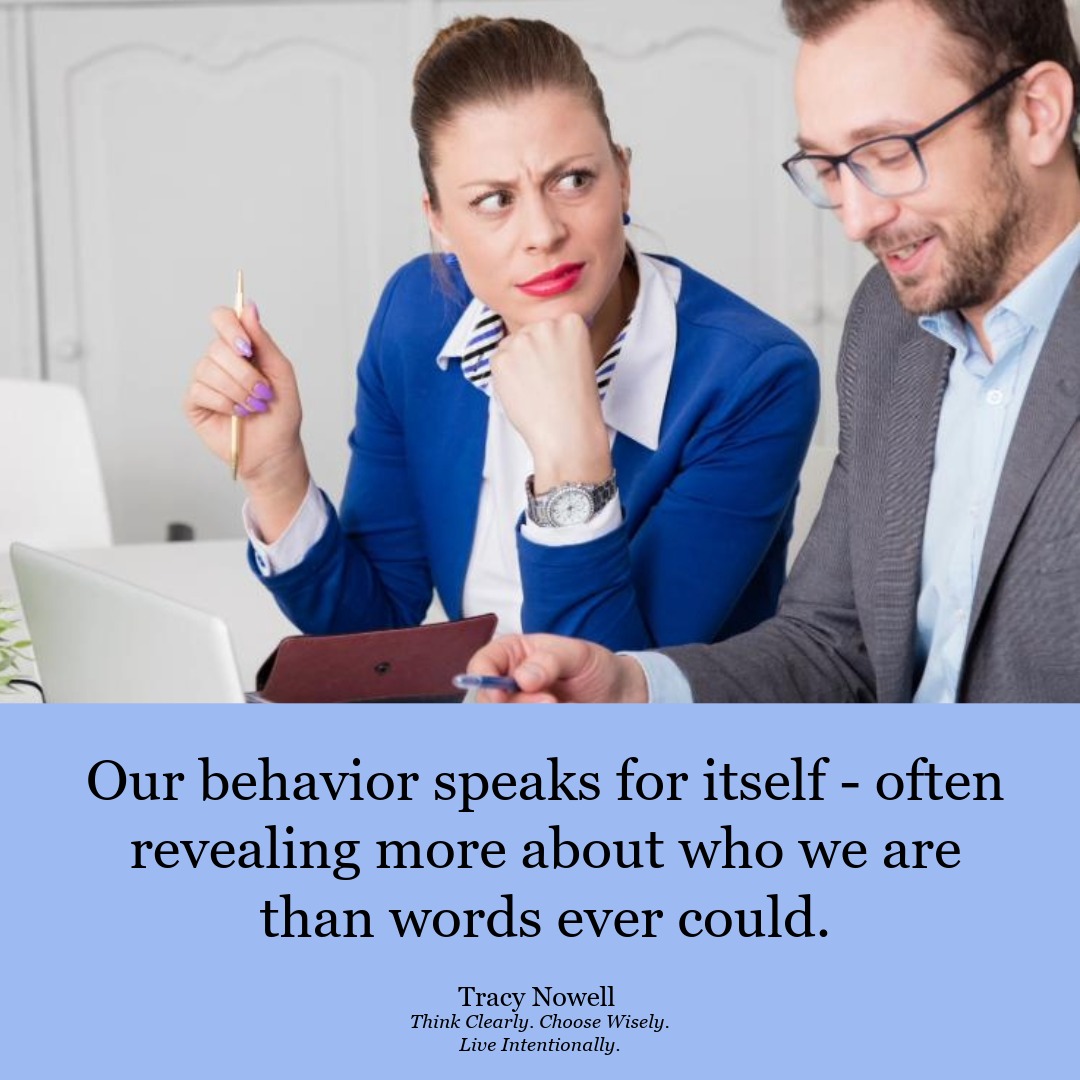
Our behavior speaks for itself, often revealing more about who we are than words ever could.
Behavior Reveals Character
In both personal and professional settings, our behavior reflects our principles, priorities, and character. As Stephen R. Covey wrote in his book, The 7 Habits of Highly Effective People, "Your behavior flows out of your character, and over time, it defines you and your relationships."
How we act, particularly under stress, profoundly influences our relationships, reputation, and perceived integrity. This underscores the point that, although words may be shaped to suit our intentions, our actions inevitably reveal our true selves.
Question: If someone judged you solely by your behavior, what truths would they learn about your principles, priorities and character?
Understanding What Shapes Our Behavior
Behavior doesn't exist in a vacuum. It's shaped by genetics, environment, experiences, and the choices we make over time.
It's also important to note the difference between individual actions and overall behavior -
- Actions are specific responses or movements, which can be either conscious (intentional decisions) or unconscious (habitual or reflexive reactions). While some actions involve deliberate choice, others occur automatically without our active awareness.
- Behavior refers to the consistent patterns of how we act over time, encompassing both conscious and unconscious actions. It reveals our habits, tendencies, and character.
Individual actions may sometimes deviate from our values, but our overall behavior—shaped by repeated actions—gives a clearer picture of who we truly are. Repeated behaviors often become automatic, making conscious reflection essential to ensure alignment with our values. Even when situational pressures or unconscious beliefs come into play, self-awareness can help realign our conduct with our intentions.
To fully appreciate the impact of behavior, consider its influence in key areas -
- Relationships: How our patterns of interaction build or erode trust, shape communication, and influence emotional dynamics.
- Environment: How our behavior affects morale, motivation, and productivity in workplaces or social settings and within our families.
- Self-Perception: How consistent behavior aligned with our values boosts self-esteem and confidence, while misalignment creates discomfort.
- Long-Term Outcomes: How our behaviors, whether constructive or destructive, impact future opportunities, reputation, and personal growth.
In his book Atomic Habits, James Clear emphasizes that small, consistent actions, when repeated, form habits that evolve into the behaviors defining who we are. Even seemingly minor choices shape our identity and how others perceive us over time. As Clear states, "Every action you take is a vote for the type of person you wish to become."
Question: In what ways do your behaviors support or hinder becoming the person you want to be?
Building Trust and Consistency
The impact of our behavior extends beyond ourselves to those who observe and are influenced by it. Consistent integrity-driven behavior fosters trust, while erratic actions erode credibility. Stephen M.R. Covey reinforces this idea in his book The Speed of Trust, saying, "Trust is a function of two things: character and competence." Trust develops when our behavior consistently aligns with our words and values.
Question: How might those you already know or hope to earn trust from evaluate the consistency of your character and competence through your behavior?
Authenticity vs. Behavioral Dissonance
Aligning our behavior with our values brings long-term benefits. Authentic behavior builds trust and harmony, while misaligned or impulsive conduct often leads to negative consequences. Stephen M.R. Covey stated, "The fastest way to build trust is to make and keep commitments - even very small ones." Consistent behavior rooted in our principles strengthens relationships and our reputation.
On the other hand, behavioral dissonance occurs when our conduct contradicts our values, leading to internal conflict and diminished credibility. Achieving alignment requires intentional effort and self-awareness. To avoid behavioral dissonance, consider the following -
- Reflection and Self-Awareness: Regularly evaluate if your behavior aligns with your values. When discomfort arises, identify and address the cause.
- Consistency in Small Actions: Reliable, everyday actions that form our behaviors build trust over time. Focus on keeping even the smallest commitments.
- Value-Driven Habits: Establish habits that naturally reflect your guiding principles based on your values. As Brené Brown says in her book Dare to Lead, "Integrity is choosing courage over comfort; it's choosing what is right over what is fun, fast, or easy; and it's practicing your values, not just professing them."
Question: In what ways do your daily actions consistently reflect the values you consider most important? Or, how might you struggle with a gap between what you believe and how you behave?
Behavior Under Pressure
Our behavior under stress is especially telling. As psychologist Dr. Carol Dweck highlighted in her book Mindset: The New Psychology of Success, "Becoming is better than being." This growth mindset encourages us to see difficult situations as opportunities to practice and refine our values. Adopting an adaptive mindset allows us to approach challenges as opportunities for growth in patience, empathy and resilience. Handling pressure reveals our true character, creating a lasting impact that uplifts or diminishes those around us and influences our chances of long-term success.
Question: How might pressure dictate your behavior? Or, how might you harness it as an opportunity to act in line with your values or guiding principles?
Final Thoughts
If you determine you need a behavioral realignment, please consider the following steps -
- Define Core Values: Identify and understand the guiding principles you want to embody.
- Set Standards: Establish clear expectations for behaviors that align with your values.
- Monitor Progress: Regularly reflect on your actions and behavior and adjust as needed.
- Seek Accountability: Work with mentors, peers or a coach to maintain alignment. Accountability can enhance commitment and growth.
- Embrace Growth: Use challenges as opportunities to practice and reinforce your values.
Our behavior constantly reflects our character and values. Every pattern of behavior shapes our reputation and influences others. As James Clear wisely noted, "Every action you take is a vote for the type of person you wish to become." By committing to intentional, value-driven behaviors, we build trust, live authentically, and leave a legacy that speaks louder than words.
"Behavior is the mirror in which everyone shows their image." - Johann Wolfgang von Goethe