Navigating the Gap Between Expectations and Reality - Without Losing Hope
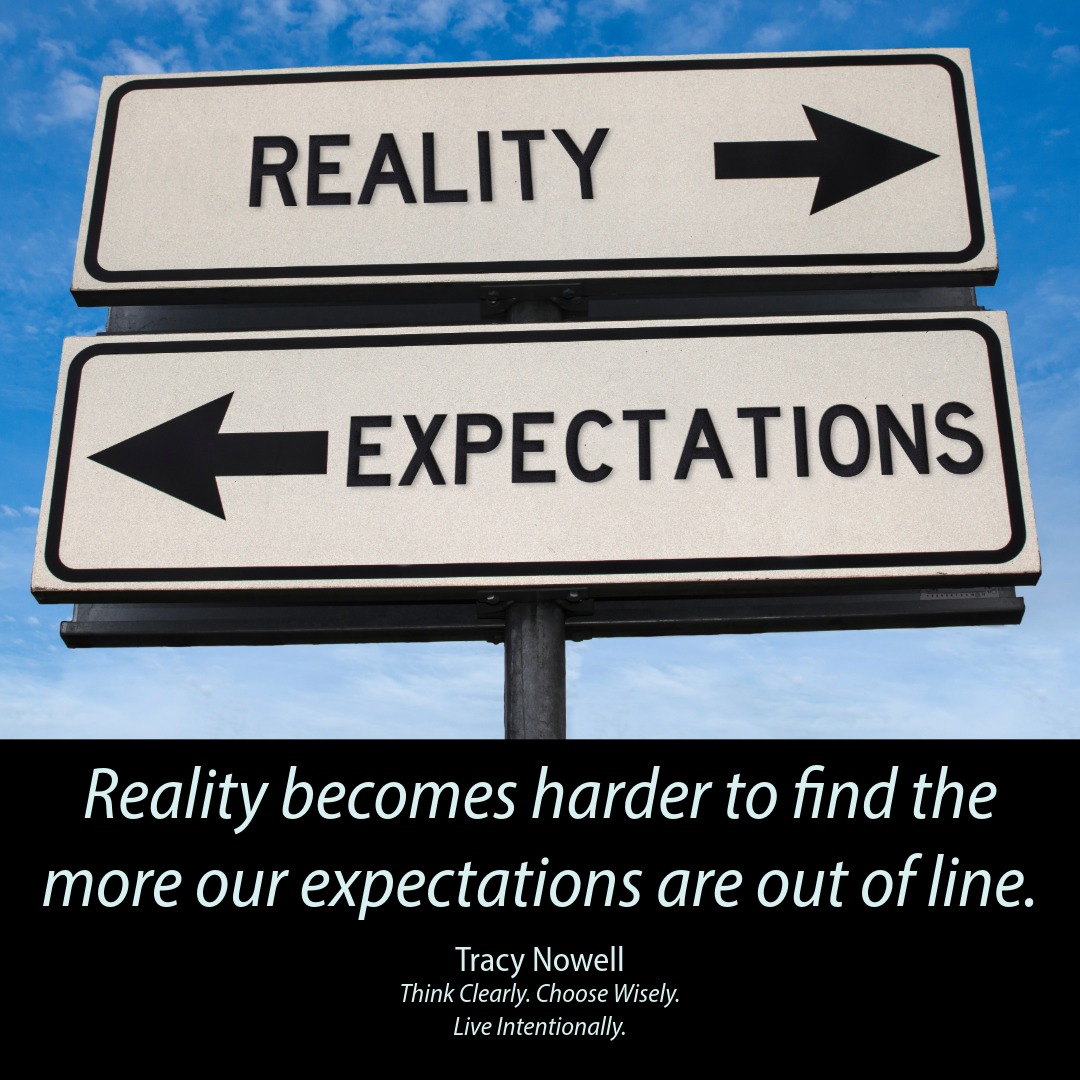
Have you ever considered the extent to which expectations influence your life - your thoughts, emotions, mindset, decisions, behavior, and relationships with others?
By expectations, I mean what you believe, hope, assume, or anticipate will happen in the future.
We have expectations of ourselves. We have expectations of others. We have expectations for our careers, marriages, families, finances, health, faith, and life in general.
What immediately comes to mind?
Would you describe it as an expectation that was exceeded, met, or fell short?
Some people likely think of accomplishments that met or exceeded their expectations - a rewarding career, a strong marriage, meaningful friendships, financial stability, good health, or a deep and enduring faith.
For others, their mind goes straight to expectations that fell short - maybe woefully short. A relationship that ended. A career that took an unexpected turn. A dream that never materialized. A prayer that seemed to go unanswered.
Those experiences are often seared into our memory.
Why?
Because the greater the gap between what we expect and what reality delivers, the greater the potential for disappointment, frustration, confusion, and pain.
Where Expectations Most Often Show Up
Expectations find their way into nearly every area of our lives. We have expectations of ourselves, of others, and of life.
While many of those expectations are reasonable and realistic, others are not. The challenge is that we often don't recognize the difference until reality fails to align with them.
- Expectations of Ourselves
Most of us carry expectations of ourselves, whether we consciously think about them or not.
We expect to make good decisions, perform well, handle challenges effectively, and achieve the goals we set. We expect our effort to move us closer to our goals and become frustrated when we don’t see the progress we expected.
Many of us also measure ourselves by outcomes. Promotions, recognition, success, and even the responses of other people often become part of how we evaluate ourselves.
When our expectations become tied to those outcomes, disappointment becomes more likely because many of the things we hope for are influenced by circumstances beyond our control. By contrast, expectations tied to our character, values, effort, and conduct help keep our attention on what we can influence rather than on what we cannot.
- Expectations of Others
Relationships are often influenced by two sets of expectations operating simultaneously - what we expect from others and what others expect from us.
Problems arise when those expectations differ, go unspoken, or are simply assumed. We often expect others to think as we do, value what we value, respond as we would or understand what we never communicated. At the same time, others may be making those same assumptions about us.
Sometimes the issue is more than poor communication - it’s unrealistic expectations. We expect people to be who they are not, to do what they are unwilling or unable to do, or to meet needs they were never intended to meet.
When expectations remain unspoken, misunderstandings become more likely. When expectations are unrealistic, disappointment becomes almost inevitable. Frustration can become resentment, and resentment can eventually damage trust and relationships.
That is why many relationship problems may stem, at least in part, from unmet, unspoken, or unrealistic expectations.
- Expectations of Life
Beyond what we expect of ourselves and others, we all carry expectations about life - and faith.
We expect hard work to be rewarded, good decisions to produce good outcomes, and life to make sense.
Sometimes it does. Sometimes it doesn't.
Even the person who thinks they did everything right still loses the job. The marriage still ends. The diagnosis still comes. The prayer is answered differently than expected - or seems unanswered altogether.
When that happens, it is difficult to understand why, leaving us searching for answers to questions that may never be fully answered.
For some of us, those expectations about life also carry over into our expectations of God. When life doesn't turn out as we hoped, we may begin to question not only what happened but also our understanding of how God works in our lives. In those cases, it is worth asking whether our expectations have been influenced more by our own assumptions than by what God has actually revealed about Himself in Scripture.
Some of life's most important lessons and opportunities for growth are found in that very gap. The gap between what we expected and what actually happened often highlights which of our assumptions and expectations were well founded - and which were not.
Examining Our Expectations
Some expectations are front and center in our minds. Others remain largely unexamined until reality challenges them. What is often less obvious is whether they are grounded in truth, worthy of our trust, and supported by credible evidence.
Consider a few of the expectations we commonly have -
- A spouse will remain faithful.
- Hard work will be rewarded.
- A trusted friend will keep a promise.
- An investment will produce the return we anticipated.
- A proven process will produce the desired result.
- God will work in a particular way.
When those expectations are not met, the emotions that follow often unveil the strength of the expectation and, sometimes, the extent to which our hope or confidence became invested in it.
They also invite us to examine the beliefs and assumptions behind our expectations by asking an important question -
Did I have good reason to hold those expectations?
Those beliefs and assumptions deserve closer examination. Three lines of inquiry can help -
Truth - Is this belief grounded in objective fact, sound reasoning, or credible evidence, or is it being influenced more by assumptions, preferences, or bias?
Trust - Has the person, organization, investment, process, or source of this belief earned my trust?
Track Record - Is there a consistent history or pattern of evidence that supports this belief?
Not all disappointment results from unrealistic or unfounded expectations. Sometimes life is genuinely difficult. Sometimes people fail us. Sometimes circumstances are simply beyond our control.
The more carefully we examine the beliefs behind our expectations, the less likely we are to be governed by assumptions we have never questioned.
Final Thoughts
Experience has taught me that many of life's disappointments are amplified by expectations built on assumptions, preferences, or beliefs about how life ought to work.
Life and people will continue to surprise us. Some expectations will be exceeded. Others will fall painfully short.
When we become too attached to outcomes we cannot control, we risk making our sense of well-being dependent on things we were never meant to control.
The goal is not to eliminate expectations altogether. The goal is to approach them with humility, evaluate them honestly, and remain willing to adjust them as needed.
"The pessimist complains about the wind; the optimist expects it to change; the realist adjusts the sails." - William Arthur Ward
Life will always contain uncertainty, which is precisely why hope and faith require a reliable anchor. For me, that anchor is God.
Hebrews 6:19 (NCV) calls the hope we have in God "an anchor for the soul, sure and strong." And Hebrews 11:1 (NKJV) reminds us that faith in Him is “the substance of things hoped for, the evidence of things not seen."
Hope gives us a reason to continue. Faith gives us something to hold on to when we are uncertain.
When life doesn't turn out as we expected, it is often easier to question God than to question whether our expectations of Him were accurate.
Looking back, many of my own disappointments came from believing that if I worked hard, treated people fairly, made good decisions, and tried to honor God in the way I lived, life would generally work out in a predictable way.
“Trust in the Lord with all your heart, and lean not on your own understanding; in all your ways acknowledge Him, and He shall direct your paths.” - Proverbs 3:5-6 (NKJV)
Experience confirmed what Scripture has taught me - that many of those expectations reflected my own understanding rather than God's ways.
“My thoughts are nothing like your thoughts,” says the Lord. “And my ways are far beyond anything you could imagine. For just as the heavens are higher than the earth, so my ways are higher than your ways and my thoughts higher than your thoughts.” - Isaiah 55:8-9 (NLT)
I have learned that while I am responsible for my attitudes, choices, and actions, many outcomes remain outside of my control.
“The mind of a person plans his way, but the Lord directs his steps.” - Proverbs 16:9 (NASB)
That is why God has been my anchor for a very long time. He is truth. He is trustworthy. His faithfulness has given me every reason to trust Him, even when I cannot fully understand what He is doing.
Rather than expecting life to follow my plans, I learned to focus on living expectantly - confident that God is in control, His understanding is greater than mine, He continues to direct my steps and is working for my good according to His purposes. (Romans 8:28 paraphrase)
Sometimes the wisest thing we can do is release the outcome, hold tightly to what we know is true, and pursue what matters most - not with rigid expectations of life, but with hope and faith that remains steady even when the future is unclear.