High-Ground Leadership: Values-Based, Principle-Centered, Character-Driven
One of the things I learned early in life is that there is often a difference between appearance and substance.
We can usually recognize a person’s talent, abilities, and success relatively quickly. Character takes longer to discern.
That distinction matters especially when influence and leadership are involved. People are far more likely to willingly follow leaders who earn their trust.
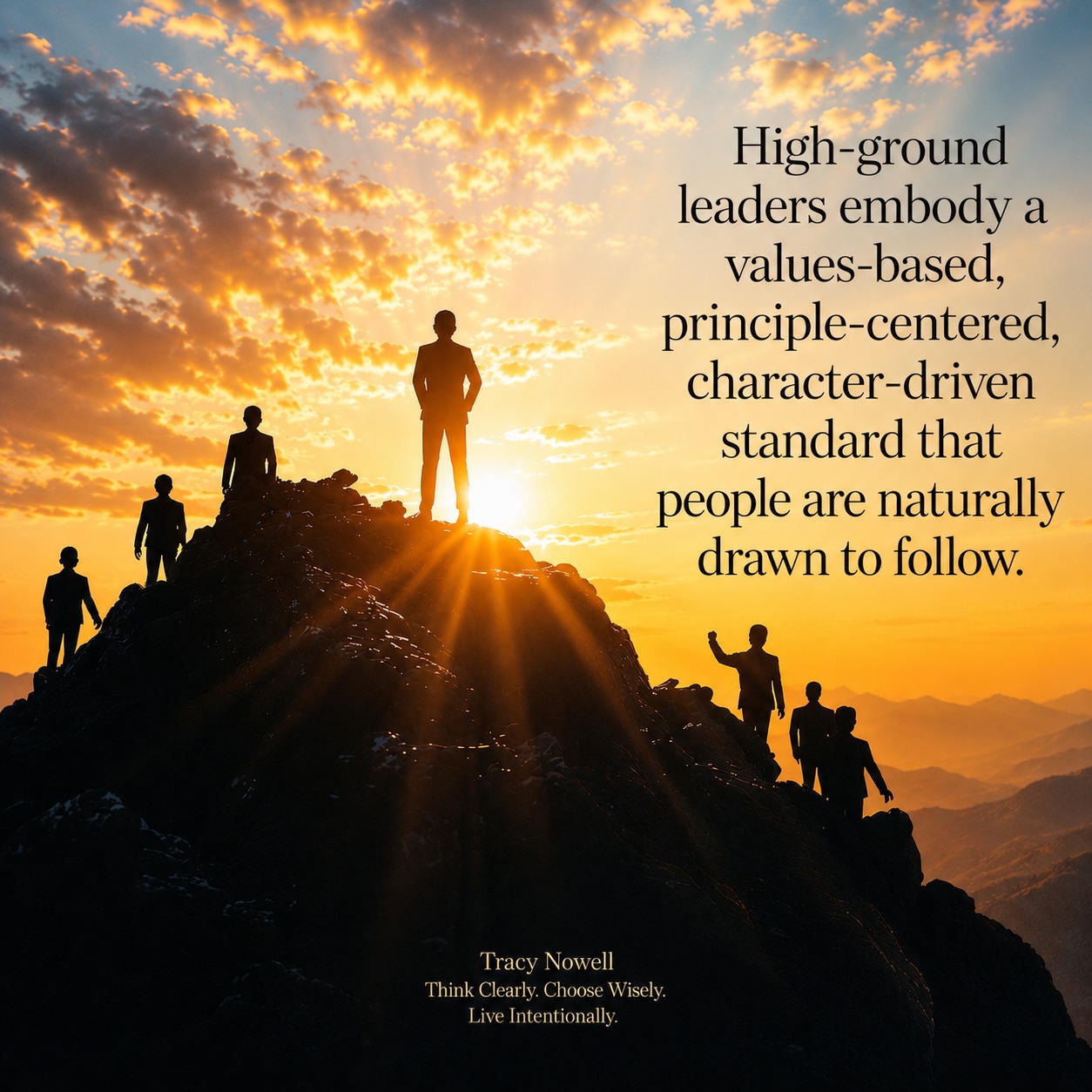
High-ground leaders embody a values-based, principle-centered, character-driven standard that people are naturally drawn to follow.
What I have observed over many years of living, leading, and coaching is that character is often revealed when we are tested. It surfaces when facing adversity, failure, criticism, temptation, and personal cost. It also shows up in the small, everyday choices we make and the manner in which we interact with others.
I believe what distinguishes high-ground leaders is the consistency between what they value, how they lead, and how they live. One of the clearest indicators of that consistency is whether they are the same person in every room, regardless of who is present or what is at stake.
When that consistency is present, trust grows. When it breaks down, credibility erodes.
Eventually, leaders become known less by the image they project and more by the fruit their lives and leadership produce.
The Foundation: Values, Principles, and Character
Whether building a home, a business, a relationship, or a life, the foundation matters. It influences what can be built, how stable it remains, and how well it withstands the pressures it will face.
The same is true of leadership.
I believe leadership is only as strong as the foundation beneath it. That foundation consists of three interconnected elements - values, principles, and character.
Values define what matters most.
They drive our priorities, influence our decisions, and reveal whether we stand firm or compromise when tested. They directly influence the relationships we build and the lives we lead.
Principles provide guidance for how we operate.
They serve as guardrails that keep us steady when circumstances become difficult, uncertain, or when the right path carries a real price. Without them, we are more likely to react to circumstances than respond according to what we know is right.
Character determines whether values and principles hold under pressure.
It's easy to appear principled when the cost is low. Character becomes most visible in the hard moments when leaders face adversity, temptation, conflict, or when doing the right thing requires paying a price.
Two Kinds of Leaders
While few leaders fit neatly into one category, I have observed two general approaches to leadership.
The Outside-In Leader
Some leaders are primarily driven by the pursuit of power, position, possessions, performance, and popularity as ends in themselves.
When leadership operates from this posture, it can still appear strong on the surface while remaining fragile beneath it. Decisions are driven more by self-interest than by conviction. Principles are upheld when convenient and overlooked when costly. Accountability is expected of others more readily than it is embraced personally.
The culture that develops around an outside-in leader reflects what that leader actually values, and often reveals more than any mission statement or cultural slogan ever could.
The Inside-Out Leader
High-ground leaders operate from a different foundation altogether. Power becomes stewardship - influence exercised on behalf of others rather than over them. Position becomes a platform for living out values and serving a purpose larger than personal advancement. Performance is evaluated by both results and the manner in which those results were achieved.
These inside-out leaders understand that trust matters more than popularity, and that it is earned, not demanded. It grows through listening, understanding, and sincere concern for others' well-being. Authority can produce compliance. Trust produces lasting influence.
What Makes the Difference?
The difference goes deeper - to what leaders value, what principles govern their decisions, and what happens when those values and principles are tested.
I believe what is often missing from the outside-in leader is humility - something that can easily erode when power, success, and giftedness become sources of pride rather than tools for service and stewardship.
Pride is often the last thing a person recognizes in themselves. It surfaces as defensiveness, resistance to correction, or the persistent need to be right.
Humility keeps leaders honest, teachable, and clear-eyed about themselves and the responsibility they carry. It also reminds us that none of us leads perfectly. We all fall short at times. High-ground leadership is not about perfection but about consistently leading in a way that sets a standard worth emulating.
The Fruit of High-Ground Leadership
Not all values, principles, and character are the same - and the fruit a leader produces will reflect that difference. I believe four things tend to happen when high-ground leadership is present.
Trust grows.
People experience consistency between what the leader professes and how the leader actually lives and leads. They observe how decisions are made under pressure and how people are treated when real costs are involved. That consistency builds trust that positional authority alone cannot create.
Culture improves.
Over time, the culture around a leader begins to reflect what that leader consistently values, encourages, and tolerates. When a leader's values and character are genuine, people are more likely to trust, contribute, grow, and speak honestly. As trust increases and accountability is consistently applied, the culture often becomes healthier, stronger, and more productive.
Relationships strengthen.
Humility changes how leaders engage - listening before speaking, seeking understanding, taking responsibility rather than deflecting it. People know the difference between someone who truly values them and someone who is managing appearances.
Influence endures.
Authority grants power, but lasting influence is earned through integrity and a track record people can trust. That kind of influence often outlasts the position itself.
Leadership always produces fruit - the question is what kind?
Healthy leadership tends to produce trust, growth, stability, and environments where people can flourish. Unhealthy leadership often produces confusion, fear, dysfunction, and distrust, regardless of how capable or successful the leader may be.
People may not remember every decision a leader made, but they remember how they were treated and how it felt to work or serve under that leader's influence.
Final Thoughts
As a leader, every decision we make, every relationship we invest in or neglect, and every value we uphold or compromise affects both our lives and the lives of those around us. The way we live and lead matters.
Scripture points us toward a model of leadership rooted in humility and service rather than self-interest.
"Do nothing out of selfish ambition or vain conceit. Rather, in humility value others above yourselves, not looking to your own interests but each of you to the interests of the others." - Philippians 2:3-4 (NIV)
These verses undergird my view of a high-ground leader. Leadership is stewardship. The way we use our position, power, or influence can have a positive or negative impact on the lives of others, and we are accountable for how we exercise it.
Stephen R. Covey, in his book, Principle-Centered Leadership, expressed a similar truth -
"To value oneself and, at the same time, subordinate oneself to higher purpose and principles is the paradoxical essence of highest humanity and the foundation of effective leadership."
Leadership is not limited to titles, positions, or formal authority. It extends into our families, workplaces, schools, churches, communities, and every area where we influence others.
Wherever influence exists, leadership opportunities exist. Every time we influence the thinking, choices, or actions of others, we are likely exercising some form of leadership.
We all have influence. The question is, what are we doing with it?
Are we building trust or eroding it?
Are we helping people flourish or contributing to dysfunction?
What kind of fruit is our life and leadership producing - and what does that reveal about the foundation beneath it?
A leader may be recognized by their fruit, but fruit is only as good as the root system beneath it.