Mindset: There’s Often More to It Than Just Deciding to Change It
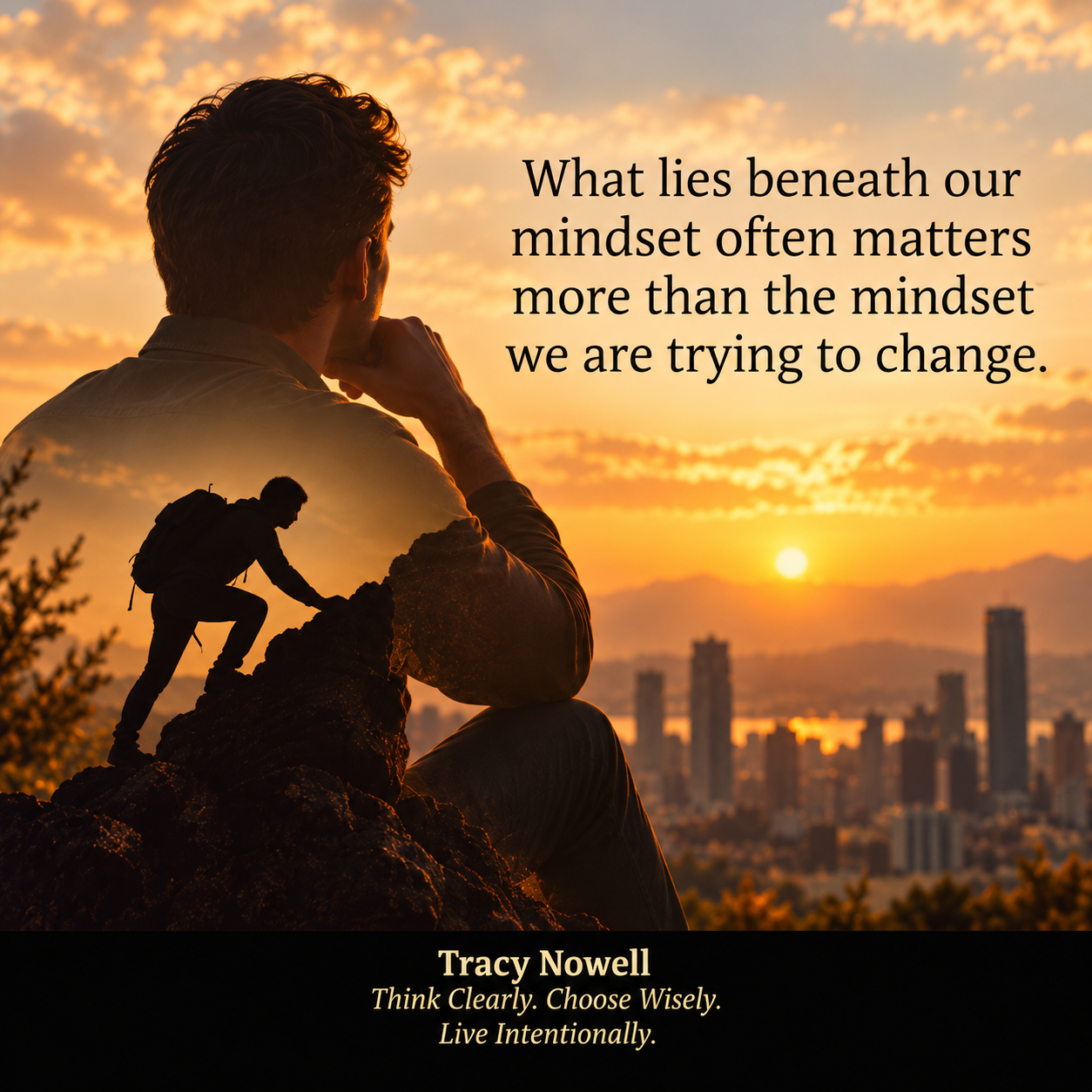
We hear a lot about the importance of having the right mindset.
Develop a growth mindset. Replace a scarcity mindset with an abundance mindset. Think positively. Be more optimistic. Be solution-focused, not problem-focused. There seems to be no shortage of advice about the mindset we should have.
But what exactly is mindset?
As I researched the subject, I found no universally applied definition. Different researchers define and study mindset in somewhat different ways, often in terms of beliefs, assumptions, attitudes, expectations, or established ways of thinking.
The more I tried to think of mindset in practical terms, the more questions surfaced.
What are we actually changing when we say we need to change our mindset?
Are we really changing our mindset? Or…are we changing the beliefs, assumptions, attitudes, expectations, and established ways of thinking that have become influential enough to affect the orientation or posture we call our mindset?
I have come to think of mindset as something of a catch-all term for these underlying influences and the orientations they help produce. That distinction matters because simply deciding to have a different mindset doesn't necessarily change the influences that produced our current one.
An analogy from the original version of this article still helps me think about this more practically - a camera.
We all view life through different lenses and filters influenced by what we believe, assume, and have experienced. Much of the time, we operate on autofocus, and that works just fine.
But circumstances change. Things don’t work out as expected. We repeatedly struggle with the same issue. We fail despite our best efforts. Or something we assumed to be true turns out not to be true at all.
Questioning our mindset is like questioning the autofocus on a camera that isn't giving us the result we want. Autofocus may be working exactly as designed, but getting a different result may require manual adjustments.
The same is often true in life. We may need another person, an objective reference point, or another source outside our perspective to help us see what we may be missing.
And just as we can adjust a camera - once we understand what needs to change - we can examine and adjust the beliefs, assumptions, attitudes, expectations, and other influences shaping our mindset.
Examining Our Mindset
Suppose three people are considering the same kind of major decision, such as -
- Buying a much larger home - stretching financially for more house than is currently needed or has previously been owned.
- Having another child - a major commitment of time, energy, money, and responsibility.
- Making a career change - giving up some degree of familiarity or security to move in a different direction.
- Making a significant investment - committing a substantial amount of money, time, or other resources to something in hopes of a favorable return or benefit.
The mindset brought to any of these decisions will depend on the person.
One person may approach the decision optimistically, focused on the potential benefits or upside. Another may approach it pessimistically, focused on the risks or challenges and what might be lost. A third may think they approach it realistically and believe they naturally view things objectively.
Excessive optimism may be supported by the assumption that things always work out, the belief that past successes will repeat, or an unwillingness to seriously consider what could go wrong.
On the other hand, excessive pessimism may stem from previous failure, disappointment, fear of loss, or assumptions that give negative outcomes more weight than they deserve.
Even someone who considers themselves a realist may rely too heavily on past experience, familiar assumptions, or confidence in their own judgment. The belief that “I am a realist” can itself become an influence if it leads someone to place too much confidence in a cursory assessment.
The greater challenge is having the awareness and humility to recognize that the influences beneath our mindset may be shaping our judgment more than the evidence, circumstances, and information we have actually considered.
New information, another viewpoint, or a trusted person's challenge can help expose that discrepancy.
That is why examining our mindset requires us to look beneath it.
Examining the Influences Beneath Our Mindset
As I thought about how to examine mindset more carefully, I found myself returning to the discernment sequence from my article Truth and Reality. If applied to the examples above, it moves us from recognizing what may be influencing our mindset to discerning what, if anything, needs to change.
- Recognize the Signal - Pay attention to new information, another viewpoint, or a challenge that creates a discrepancy between what we believe, think, or feel and what may actually be true.
- Examine the Influences - Identify the beliefs, assumptions, expectations, experiences, or other influences beneath our existing mindset.
- Challenge the Influences - Question whether those influences deserve the weight they are receiving or whether they may simply be wrong.
- Clarify What Is True - Test them against the facts, circumstances, evidence, and other relevant information.
- Understand What It Means - Connect what we have learned about our existing mindset and its underlying influences to how they affect our thoughts, decisions, and actions.
- Discern What Needs to Change - Determine which underlying influences, if any, need to be corrected or changed.
If we fail to apply discernment, we may recognize that our mindset needs to be questioned but still fail to identify and address the beliefs, assumptions, expectations, experiences, or other influences that need to change.
Repeated over time, this kind of examination can deepen our knowledge and understanding and help us approach future decisions and situations with a more informed and intentional mindset.
Big-Picture Mindset and Situational Mindset
As I reflected on my life experiences and what I have learned, I began to see mindset operating at two levels -
- The mindset we bring to a particular situation.
- The broader mindset that influences how we approach life as a whole.
We may have a situational mindset toward a particular decision, challenge, relationship, activity, or goal. It can change as circumstances change, as we gain new information, or as we better understand what the situation requires.
At the same time, we may develop a big-picture mindset - a broader orientation toward life, work, relationships, success, failure, ourselves, and what we believe matters most.
In my own life, I have found that the broader mindset tends to be more stable because it is grounded in my beliefs, values, and guiding principles developed through accumulated learning and experience.
But stable does not mean static.
As I become more aware, question what I think and assume, challenge my interpretations, seek greater clarity, and apply what I learn with discernment, I continue to hone and refine that broader mindset.
I have found that the big-picture and situational mindsets influence one another.
My big-picture mindset can influence the more specific mindset I bring to a particular situation, while what I learn through individual situations can contribute to the broader orientation I carry forward.
Looking back, I can see that a broader governing mindset often influences how I adjust to specific situations, challenges, or goals, even if I am not consciously thinking about it as mindset at the time.
Final Thoughts
The more I have thought about mindset, the less I think the goal is simply to develop a more positive, optimistic, confident, or growth-oriented one.
I think it is more about being aware of whether the mindset we bring to what we encounter - and the beliefs, assumptions, expectations, and other influences underlying it - aligns as closely as possible with the reality we face and helps rather than hinders our judgment and actions.
It is also about becoming more aware of the broader mindset that influences how we approach life and the more specific mindsets we bring to particular situations.
Determining what is true in a particular situation may require us to consider the evidence, draw on relevant experience, weigh the likely consequences of our choices, and apply discernment to what we have learned. Our values and guiding principles, along with wise counsel, can then help guide the decisions and actions we take in light of what we understand to be true.
For me, that broader orientation is grounded in God and the truth of the Bible.
Scripture tells us to “set your minds on things above” (Colossians 3:2 NIV), to “have the same mindset as Christ Jesus” (Philippians 2:5 NIV), and to have “the same attitude of mind toward each other that Christ Jesus had” (Romans 15:5 NIV).
Since God is my anchor, the beliefs, assumptions, expectations, and other influences underlying my broader mindset should increasingly align with His truth and reflect the mindset of Jesus.
This doesn't mean I always see things correctly or bring the right mindset to every situation. That is why I continually need to examine my thinking, question what I am assuming or believing, and bring it back to the truth I have chosen to trust.
Something Scottie Scheffler said after winning the 2022 Masters illustrates how a strong foundation can influence the way we approach what we do. Scheffler was asked how he balances his desire to compete without allowing golf to define who he is. He pointed to his faith and said, “My identity isn't a golf score.” When asked whether that freed him up in the moment and made him less nervous, his answer was, “100 percent.”
I don't know the specific mindset Scottie Scheffler brings to competition, but I understood the larger point he was making.
When our identity is grounded in something much larger than the outcome, it can free us to focus more fully on the moment and what we need to do - without allowing the outcome to define us.
What anchors our identity can powerfully influence our broader mindset and the more specific mindsets we bring to whatever we face - whether in our relationships, our work or leadership, our challenges, life more broadly, and yes, even our golf game.
Life doesn't guarantee the outcomes we want, and neither does approaching life with the right mindset.
But we can continue examining what underlies our thinking, refining the broader mindset that guides us, and adjusting the specific mindsets we bring to what we encounter. When needed, those adjustments should align our thinking more closely with the reality we face and the principles we have chosen to live by.