The Problem Beneath the Problem Is Often Ourselves
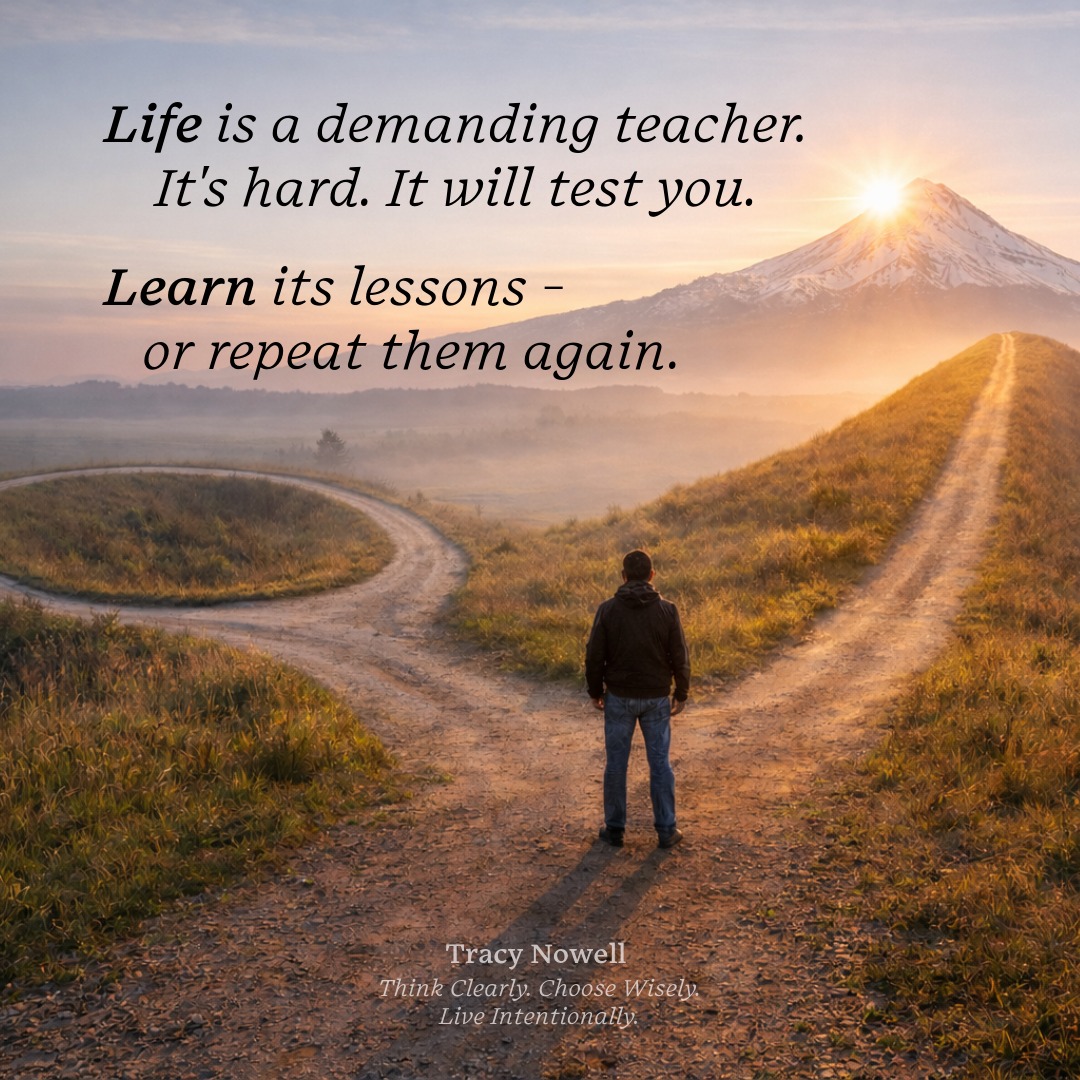
Life can be hard.
Anyone who has experienced loss, disappointment, failure, betrayal, health challenges, financial strain, or relational tension understands this instinctively.
The statement “Life is hard” isn’t pessimistic. It’s truth. Difficulty is not an unwarranted interruption of life; it is part of how life works.
Pressure, conflict, setbacks, and unmet expectations are part of life among imperfect people living in an imperfect world.
Yet when life feels harder than it should, we often look outward for an explanation - other people, timing, resources, or circumstances. We expect life to cooperate with our plans. When it doesn’t, we may feel blindsided, frustrated and sometimes even wronged.
But life being hard is not the whole story.
Sometimes we are our own worst obstacle - the problem beneath the problem.
Not because we are incapable of addressing life’s challenges, but because we resist facing reality.
- We defend what needs correcting.
- We repeat what is not working.
- We protect the parts of ourselves that need confronting.
In ways both subtle and obvious, we become our own stumbling block.
This does not mean that every hardship traces back to us. Some circumstances and their outcomes cannot be anticipated or controlled. But we are responsible for how we interpret and respond to them.
The Problem Beneath the Problem
When difficulty arises, the event is not only a disruption; it’s a trigger that activates our natural human responses. Both psychology and Scripture help explain what is happening beneath the surface.
Under pressure, and even in ordinary circumstances, our first instinct is not to seek truth. We scan for threats to our safety, control, reputation, or sense of self.
Psychology tells us that when our identity, control, or security feels threatened, the mind shifts into protection -
- It narrows focus.
- We defend.
- We explain.
- We justify.
And it rarely feels wrong. It feels reasonable, even necessary.
But protection becomes a problem when it shifts from discerning what is true to defending our ego, our image, our sense of control, or our need to be right.
When protection guides perception, we stop responding to reality and start responding from self-preservation. That is how we become part of the problem - not because we are malicious, but because instinctive protection often precedes honest examination.
The Biblical perspective moves beyond mere circumstance to the condition of the heart - not merely our emotions, but the inner core of our thoughts, choices, and direction in life.
Scripture emphasizes the central role of the heart in shaping our lives - “Guard your heart above all else, for it determines the course of your life.” - Proverbs 4:23 (NLT)
Jesus taught that our words and reactions reveal the condition of the heart – “What you say flows from what is in your heart.” - Luke 6:45 (NLT)
When our heart is humble, it becomes teachable and moves toward wisdom (Proverbs 11:2). But when it is governed by pride or self-justification, our ways can seem right in our own eyes - even when they are not (Proverbs 12:15; 14:12; 16:2; 21:2)(ESV).
While psychology explains the mechanism of self-protection and Scripture points to the condition of the heart, both point to the same reality -
When pride or self-preservation takes hold, we begin to interpret reality selectively, favoring what protects us and resisting what exposes us.
The Illusions We Lean On
When we respond from self-preservation rather than from truth, we begin constructing narratives that preserve our sense of control instead of facing reality.
Over time, those narratives evolve into illusions that feel reasonable, justified and protective - and that is precisely what makes them so difficult to recognize.
Illusions may offer a false sense of stability, but they only delay facing the facts.
Here are some of the most common illusions we lean on –
- The Illusion of Control
“If I make the right choices, I should be able to control what happens .”
We influence results, but we do not control every variable. When results differ from our expectations, we may try to exert more control - or reinterpret the outcome to preserve our sense of control rather than accept our limits. In most situations, the only thing we truly control is ourselves.
- The Illusion of Predictable Outcomes
“If I do things right and work hard, life should produce the result I expect.”
Discipline and effort increase probability, not certainty. When we equate effort with entitlement, disappointment can turn into frustration. Instead of adjusting to reality, we resist it. Our efforts influence outcomes, but they do not guarantee them.
- The Illusion of External Blame
“If circumstances were different, I’d be fine.”
Circumstances are an easy scapegoat. They influence us, but they do not excuse us from our responsibility. When we blame what we cannot control, we fail to confront what we can - and nothing changes.
- The Illusion of Self-Sufficiency
“I can handle this on my own.”
Independence can be a strength, but isolation narrows our perspective. Without honest feedback, blind spots remain, and our thinking goes unchallenged.
- The Illusion That We Are Not Part of the Problem
“This isn’t my fault.”
We readily accept credit for success but distance ourselves from failure. That pattern may make us feel better, but without ownership, nothing changes.
Taken together, these illusions -
- Blur the limits of our control.
- Assume desired outcomes are guaranteed.
- Deflect responsibility.
- Dismiss others’ perspectives and help.
- Avoid personal responsibility.
They feel stabilizing. But they compound the very problems we should be trying to solve. And that is how we become our own obstacle.
We see this in leadership, the workplace, relationships, and parenting. When we assume the issue is entirely “out there,” we stop asking what part of it might be ours. And when examination stops, so does progress.
Recognizing Our Part in the Problem
When we are the problem beneath the problem, we rarely see it that way.
The real issue is not simply that we defend, repeat, or protect what should be confronted. It’s that we fail to recognize what is driving those reactions.
- Unrealistic optimism that ignores inconvenient facts.
- Expectations that were never realistic.
- Neglecting what is within our control while focusing on what is not.
- Pride that mistakes self-reliance for strength.
- The need to be right overriding our willingness to listen or accept help.
- Dismissing our contribution to the difficulty we are facing.
Growth begins when we stop protecting what doesn’t work and start figuring out what might.
Sometimes we are unaware. Other times, we understand exactly what is happening but resist what change would require of us. In those moments, the most likely question on our mind is, “How do I make this go away?” Relief becomes the goal.
But the better question is, “What do I need to learn from this, and what might need to change in me?”
Change becomes possible only when we acknowledge our part in resolving the issue rather than perpetuating it. We can willingly examine ourselves - or we can wait until consequences make that examination unavoidable. One path requires humility by choice. The other may impose it through consequence.
Final Thoughts
We should expect life to have its difficulties. For those who assume otherwise, Jesus said it plainly -
“In this world you will have trouble” - John 16:33 (NIV)
Not “might.” Will.
Trouble is not reserved only for the reckless or the irresponsible. It comes for all of us. Hardship should not surprise us - we are imperfect people navigating an imperfect world. We will take wrong turns, make poor decisions and experience consequences - some of our own making, and some beyond our control.
That is life.
Based on my own experience, life has proven to be a demanding and, at times, an almost unbearable teacher. I learned very little when life was easy. It was in the difficult seasons - the ones that tested and even broke me - that I was rebuilt in ways that made me stronger, and hopefully wiser.
Only in hindsight did I come to appreciate the hard-earned lessons that emerged from seasons of adversity, because their impact unfolded slowly over time.
Scripture gives us a deeper perspective on those seasons. The Bible tells us to “consider it pure joy” when we encounter trials - not because they feel good, but because they produce perseverance and maturity (James 1:2-4, NIV). Tests and trials reveal whether we are guided by truth and an examined life - or by self- preservation that resists self-examination.
Over the years, the most important lesson I learned from adversity was to pause and ask -
“Okay, Lord, what do you want me to learn from this?”
That simple question changes everything. It moves us from -
- Reaction to reflection
- Self-protection to teachability
- Illusion to truth
We cannot control every circumstance, but we can choose how we respond to hardship. We can fight against it - or allow it to reshape us.
The difference lies in whether we remain teachable - or repeat the same lessons again and again. At its core, this choice is about humility.
Scripture does not soften that warning -
“Do you see a man who is wise in his own eyes? There is more hope for a fool than for him.” - Proverbs 26:12 (ESV)