Sacrifice: What We Gain, What We Lose and What it Reveals
Why success requires sacrifice - and how misaligned sacrifice can cost more than we realize
A young aspiring entrepreneur once asked me a thoughtful question.
“What do you now know that you wish you knew when you were my age?”
Questions like that sound simple at first, yet they are often difficult to answer well. I had to sit back and think about my answer because my list of “things I wish I knew when I was young” is quite long.
After reflecting, I narrowed it down to two words -
Sacrifice. Expectations.
And from those two words came the substance of my answer -
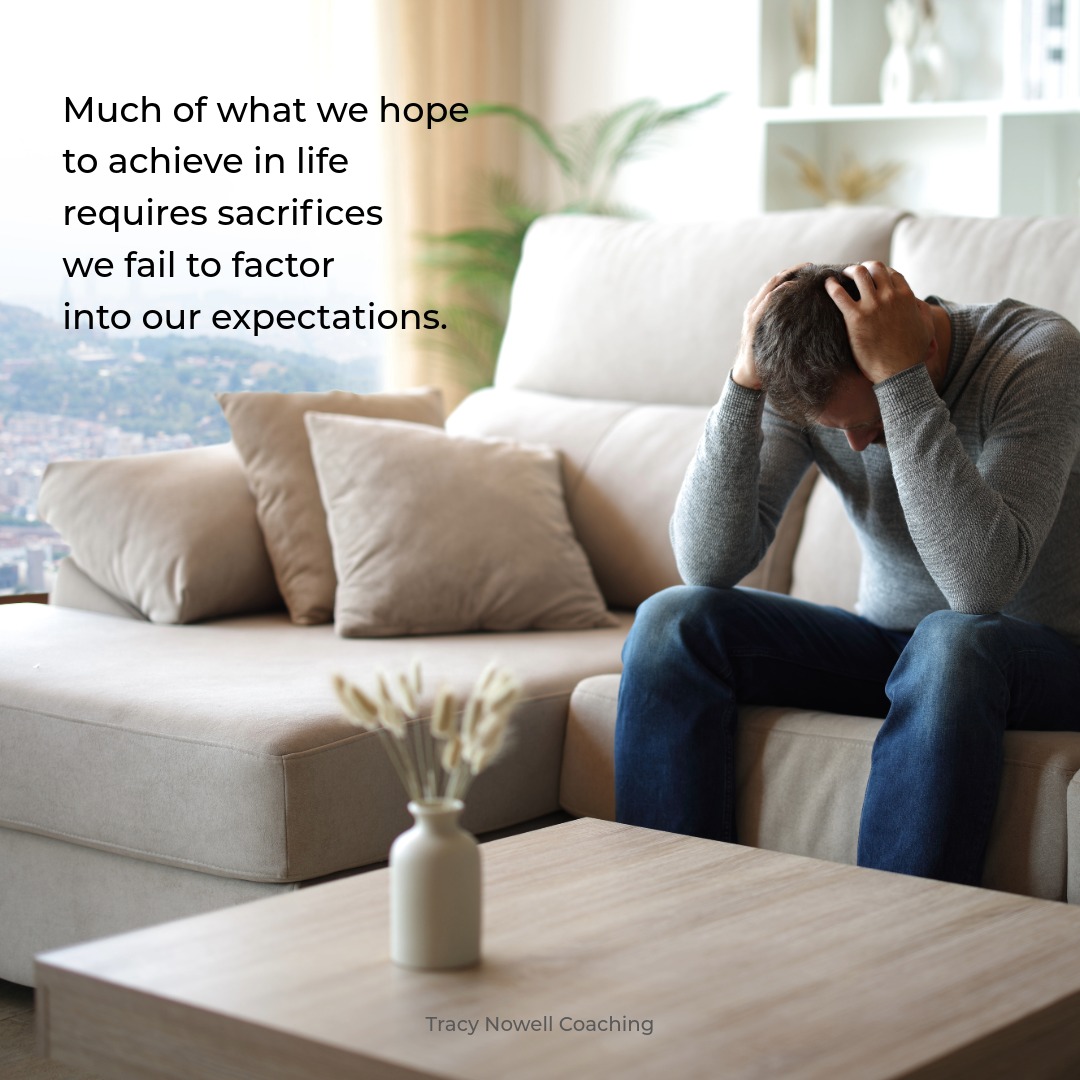
Much of what we hope to achieve in life requires sacrifices that we fail to factor into our expectations.
More often than we might admit, our expectations are not always grounded fully in reality. Limited experience, incomplete planning, or wishful thinking can lead us to assume that things will unfold more smoothly than they actually do.
When we finally face reality, adjustments are required - and often come with costs we didn’t plan for. The tension we experience is not always that something has gone wrong, but reflects something we didn’t anticipate.
And when we fail to anticipate, we learn the hard way that sacrifice is an inherent part of most meaningful pursuits.
Or as I have learned, nothing worthwhile comes easy.
Success requires sacrifice because our time, energy, and resources are limited - pursuing one thing always means giving up something else.
There are, of course, people with extraordinary talent who seem to make life look easy. But behind the scenes, even among the most gifted people, sustained success always requires effort, discipline, and sacrifice.
Recognizing this reality requires a clear understanding of the costs and trade-offs in our decisions, as well as the investments required to pursue, achieve and sustain what we choose.
Three Forms of Sacrifice: Exchange, Investment, or Virtue
As I thought about sacrifice, both from my own experience and observing or learning from others, I believe sacrifice takes on three major forms. These forms are not rigid categories but common ways sacrifice appears throughout life.
1. Sacrifice as Exchange
Life constantly presents us with decisions that require choosing one thing and giving up another.
We face choices between discipline and immediate gratification, work and family, others and self, and responsibility and relaxation - and we don’t always choose wisely. Over time, these repeated trade-offs form patterns in how we spend our time, energy, attention and money.
Our choices reveal our priorities. What we consistently give up often reveals what we truly value. And those patterns begin to define the direction of our lives.
2. Sacrifice as Investment
When we pursue something meaningful over time, sacrifice becomes an ongoing cost. The question then becomes - “Can we sustain it?”
- Starting a business requires initiative and carries risk; sustaining it requires resilience and disciplined execution.
- Marriage starts with a wedding day commitment; sustaining it requires humility and a shift from “me” to “we.”
- Saving for the future requires consistent sacrifice today; sustaining it requires a long-term perspective.
- Raising children means taking on responsibility for another life; sustaining it requires time, energy, and consistent presence.
- Improving our health may begin with a plan; sustaining it requires discipline long after motivation fades.
The things we most desire are rarely difficult to want - but often difficult to sustain.
Over time, these sustained sacrifices hopefully produce a return.
- A business or career can create income, opportunity, and the ability to build something of lasting value.
- A healthy marriage can provide companionship, support and stability.
- Long-term financial discipline can provide stability, freedom, and options later in life.
- Investing in children supports their growth and maturity, while bringing joy and purpose to parents.
- Sustained attention to health can produce strength, energy, and long-term well-being.
But those returns are not automatic. They require an ongoing commitment. When we invest in one area, we limit what we can invest elsewhere.
3. Sacrifice as Virtue
A third dimension of sacrifice emerges when our focus shifts from achievement to the good of others.
- Parents sacrifice sleep, time, and comfort for their children.
- Leaders sacrifice ego to develop and elevate those they lead.
- Individuals sacrifice personal resources to help someone in need.
At this level, sacrifice becomes more than exchange or investment.
Sacrifice becomes a virtue - expressed in what we give and what we are willing to let go of within ourselves.
Some of the most meaningful things in life are not achieved but received - love, forgiveness, wisdom shared by others, opportunities we did not create. Receiving these often requires surrendering something inward - pride, control, or the illusion of independence.
Sacrifice reveals character.
It shows whether we are protecting ourselves or becoming people capable of loving, serving, and giving of ourselves - and receiving from others, with humility.
At its best, sacrifice becomes a gift that expects nothing in return.
When Sacrifice Becomes Misaligned
Sacrifice always has a cost. Yet there are times we fail to properly account for what we are giving up. Sometimes we see the trade-offs and ignore them. Other times, we don’t recognize them at all.
Our efforts and decisions may lead to success -
- Position rises.
- Power grows.
- Possessions increase.
- Performance improves.
- Popularity broadens.
But the cost may tell a different story -
- Relationships grow strained or distant.
- Burnout begins to replace motivation.
- Satisfaction gives way to frustration or resentment.
- Peace of mind declines under constant pressure.
- Integrity is gradually compromised by decisions once considered unacceptable.
Sometimes these sacrifices arise from our own ambitions or unchecked priorities. At other times, they emerge from expectations placed upon us by others.
People may ask for sacrifice as proof of loyalty, commitment, or love. In some situations, those requests are reasonable. In others, they become pressure or manipulation - whether direct or subtle.
Even without pressure, we can misapply the concept of sacrifice, doing more harm than good. What feels like support can become enablement, shielding others from the consequences of their choices. In these situations, it delays accountability and prolongs unhealthy patterns.
The danger of misaligned sacrifice is that, over time, overlooked trade-offs shift our priorities, allowing pursuits that once served our values to begin to override them.
When sacrifice is aligned with truth, sustained with discipline, shaped by empathy, and guided by purpose - it strengthens us and others. When it is not, it can produce a life that appears successful on the outside while becoming unstable on the inside.
So, what are you sacrificing that you may not even realize you’re sacrificing?
And, what is it costing you?
Final Thoughts
As I thought about sacrifice, three things stood out -
First, sacrifice is the act of giving up something of value to pursue, obtain, or preserve something else. It is an unavoidable part of everyday life.
Second, what we value reveals itself through what we are willing to sacrifice for. Our decisions demonstrate what matters most.
Third, if we are not intentional about what we sacrifice for, we may slowly find ourselves sacrificing what matters most for something lesser.
This cuts to the heart of the issue - misalignment. It’s not just sacrificing for the wrong things, but for the wrong reasons.
There have been times when I sacrificed because it was expected, tried to please someone whose opinion mattered too much, or took on more responsibility than was mine to carry. At other times, I stepped in to fix things that required sacrifice on my part, believing I was helping, only to realize I may have been getting in the way of lessons that needed to be learned.
Sometimes sacrifice is driven by approval, fear, or a desire to control outcomes that were never ours to control. And sometimes, what seems like help is actually interference - preventing others from facing consequences that could lead to growth or change.
And there is another side to this -
Some resist sacrifice altogether, expecting life to be easier than it is or to work in their favor. Rather than accepting what is required to pursue or sustain what matters, they avoid or defer the cost or rely on others to carry what they are unwilling to shoulder. What is avoided or deferred does not go away - it often compounds.
The clearest and most consequential expression of sacrifice is revealed in the Bible -
Scripture speaks to what we value -
“Wherever your treasure is, there the desires of your heart will also be.” - Matthew 6:21 (NLT)
It also speaks to the importance of understanding the cost -
“Which of you… does not first sit down and count the cost…” - Luke 14:28 (ESV)
When we sacrifice, we are called to do so with awareness, discernment, and alignment with what we believe is true and right.
God revealed what He values -
“God showed his great love for us by sending Christ to die for us” - Romans 5:8 (NLT)
And the cost -“He gave His one and only Son” - John 3:16 (NLT).
And the example, in Jesus’ own words -
“No one can take my life from me. I sacrifice it voluntarily” - John 10:18 (NLT).
I still think about that young entrepreneur’s question - it’s what led me to write this. What I’ve learned in life - what I didn’t fully understand when I was younger - are the very things Scripture calls us to examine - what we value, what it costs, and whether it aligns with what truly matters to God.
So, before we sacrifice - before we give, commit, or take on what is in front of us - it is worth pausing long enough to ask -
What do I gain - and what am I giving up?
What do I lose - and is the cost worth it?
What does it reveal - and is it aligned with what matters most?