Balancing the Scales in Life
I don't remember hearing anything about “life balance” or “work-life balance” when I was growing up, nor during much of my adult life. I was simply focused on the roles and responsibilities I had taken on and managing them as well as I could.
I had no reason to expect life to be easy. In fact, I learned to expect exactly the opposite. And I certainly didn't think about whether my life was “balanced.”
But in more recent times, there seems to be an emphasis on finding balance in our lives - how we divide our limited time, energy, attention, effort, and money among work, family, health, friendships, spiritual life, financial responsibilities, personal interests, recreation, and other things that matter to us.
I don’t see that as a bad thing. Seeking greater balance sounds reasonable.
But life is not always reasonable.
My guess is that my life may have looked imbalanced much of the time. But considering everything I was responsible for, I'm not sure how much focusing on whether my life was appropriately balanced would have helped.
The demands of life rarely remain constant long enough for us to establish some ideal allocation and maintain it. What requires more from us today may require less tomorrow, and something that normally receives little attention may suddenly require considerably more.
And for most of us, we keep adding more and more things to the mix.
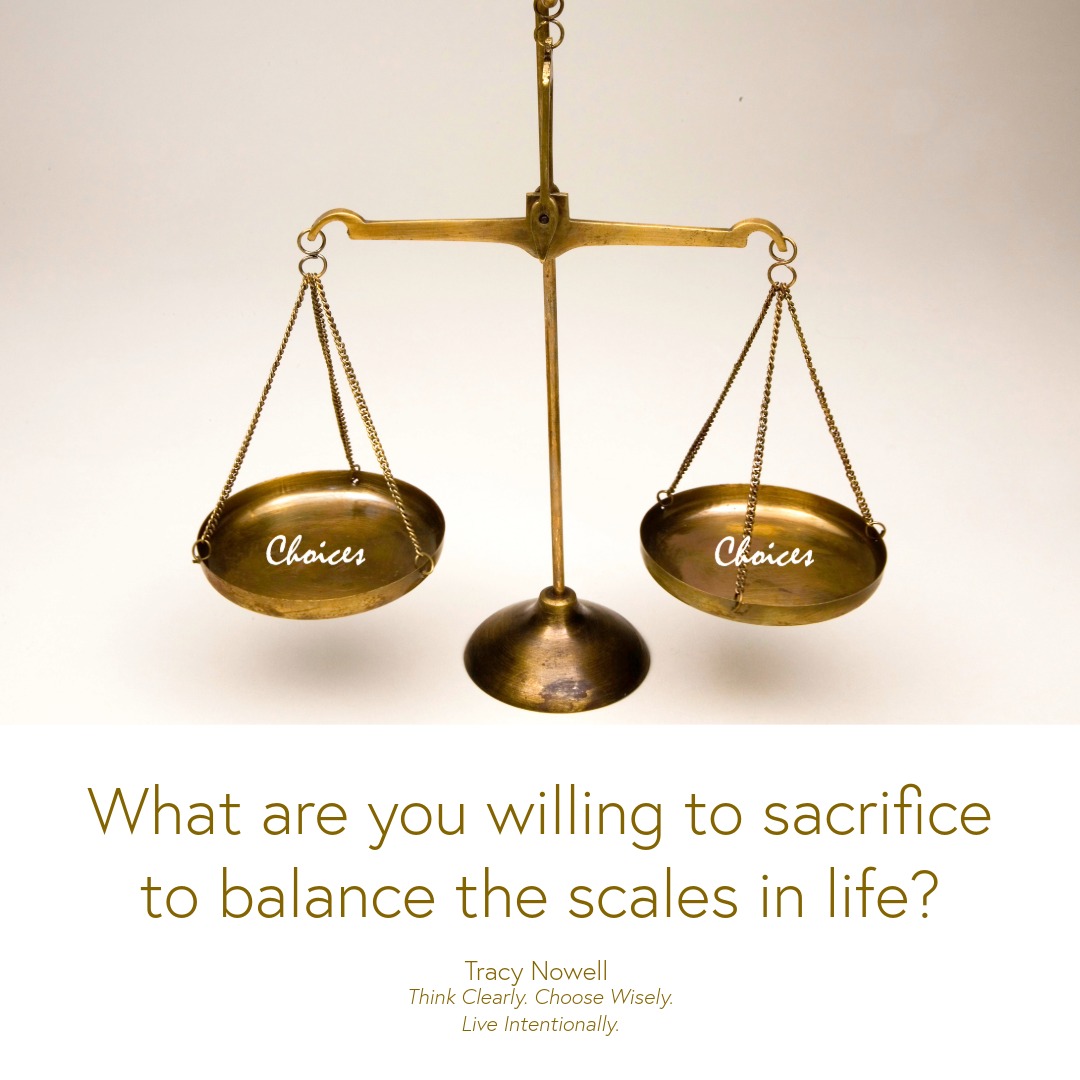
In my opinion, rather than using the scales to measure whether our lives are appropriately balanced, we should use them to weigh the choices we make, the trade-offs that come with them, and the sacrifices we are willing to make.
Unavoidable Choices
When people say they want more balance in their lives, it can mean different things.
- One area is consuming us. Whether it is work, family responsibilities, caregiving, financial pressures, or something else, one or more areas of life can demand so much of our time, energy, attention, and resources that too little remains for everything else.
- We want our lives to be fuller. We may value the life we have while still wanting more room for relationships, health, faith, personal interests, recreation, or other things important to us.
- Something needs or deserves more from us. A change in our circumstances, responsibilities, priorities, or goals may cause us to recognize that something should or must receive more of our time, energy, attention, or resources than it currently does.
- What we are doing is no longer sustainable. The cumulative demands have become more than our time, energy, attention, or resources can continue to support without consequences.
Each may present different choices, but they share the same challenge because they face the same reality - there is only so much of us to go around. That reality forces us to consider what any change might require -
- If work is consuming us, what do we gain by giving less to it, and what might it cost us?
- If we want more time for ourselves or our families, where does that time come from?
- If something now needs or deserves more from us, what will have to receive less?
- If we want to add something else to our lives, what will we subtract?
- And if our situation is unsustainable, what should change and what will that change require?
I remember watching an entertainer on an old television show spin multiple plates on long dowel rods. As he added more plates to more rods, he had to move faster and faster from one to another to keep all of them spinning.
Life can be a lot like that.
We don't just have demands placed on us - we add many of the plates ourselves - another goal, pursuit, commitment, possession, or responsibility. And many of those additions are good things.
However, the more plates we have spinning, the less attention we can give each one. At some point, the cumulative demand exceeds our capacity to manage them well. As we wear ourselves out or lose focus, things begin to break.
We all have to choose what receives more and what receives less, what we can legitimately take on, and what we cannot. We have to weigh what we gain against what we give up and decide whether the cost is worth it.
What Guides Our Choices?
There is no shortage of advice or tips about finding greater balance, such as establishing priorities, setting boundaries, managing our time and energy, reducing commitments, learning to say no, and making more time for ourselves and the people who matter to us.
These can be helpful, though they still leave us to figure out what the problem actually is. But even knowing what to do in principle doesn't tell us how to make the choices required to do it.
Where should we set the boundary?
What should we say no to?
Which priority should receive more when two priorities compete?
What are we willing to sacrifice to make room for something else?
As I considered how I personally weigh these choices, I identified three broad areas with a stake in the outcome -
- Beliefs, values, and commitments - our fundamental beliefs about what is right and wrong, what we value as most important, and the commitments and non-negotiables that reflect them.
- Needs, wants, priorities, and goals - what we feel we need or seek from life and what we are trying to accomplish.
- Available resources - the time, energy, attention, focus, and money we actually have to work with.
Sometimes a choice can reasonably satisfy the considerations within all three areas. At other times, it cannot.
We may consider each of these areas independently, but difficult choices often require us to consider how these three areas interact. When legitimate interests within those areas conflict, we have to weigh one against another, and choices often become difficult.
Therefore, we need a basis for discerning which competing interests carry the most weight, why, and how to distribute our limited resources.
Guiding Principles at the Intersection
As I considered how these different areas factor into difficult choices, I kept coming back to the role of guiding principles.
As I wrote in Principles versus Preferences, our principles express our beliefs and values as the standards we use to evaluate our choices and direct our lives. They become guiding principles when we intentionally choose to live by them. Ideally, we establish those guiding principles before we face difficult decisions.
We may have a worthwhile goal, but pursuing it could require resources that are also needed to fulfill an important commitment. Something our family needs may conflict with something we personally want. An opportunity may support an important priority while requiring more money, attention, or energy than we can responsibly give it.
It is at the intersection of these three areas that much of the give and take in our choices occurs. Guiding principles help us discern what should carry the most weight in that decision.
They inform the evaluation of our choices as we seek the closest possible alignment among our beliefs, values, and commitments; our needs, wants, priorities, and goals; and our available resources. How those principles apply to a particular choice is where discernment becomes so important.
And sometimes, regardless of how we weigh those considerations, reality steps in.
Reality doesn't necessarily determine what matters, but it can make what is no longer possible obvious.
Guiding principles don't change the trade-offs, sacrifices, or limitations we face - they help us discern whether we are giving the competing considerations their appropriate weight.
Final Thoughts
The pursuit of greater balance in life cannot be separated from the realities of limitation, choice, and sacrifice.
- Our resources are limited. We cannot give more to everything.
- More is not always better, and less is not always a loss.
- Giving more somewhere usually means sacrificing somewhere else.
Yet we often add another goal, commitment, pursuit, possession, or responsibility without fully considering what it will require from us because every addition makes a claim on our limited resources.
An imbalance does not necessarily mean we are out of alignment.
There will be times when our circumstances, responsibilities, commitments, or priorities legitimately require us to give considerably more to one part of our lives than another. The issue is not whether every part of life receives an equal or ideal share, but whether the choices creating that imbalance align with our guiding principles and the realities we face.
The Bible adds an important challenge -
“I have the right to do anything,” you say - but not everything is beneficial. “I have the right to do anything” - but not everything is constructive.
- 1 Corinthians 10:23 (NIV)
Just because we can add something to our lives or allocate more of our resources to an existing need or priority doesn't necessarily mean we should.
Something can be good, desirable, or within our reach and still not be worth what it requires from us.
While we make these choices individually, their cumulative effect also matters. Stepping back to assess the overall balance in our lives - whether as it exists today or by looking back over a period of time - can help us see where our time, energy, attention, and resources are going or have gone, and whether our cumulative choices are aligned with our guiding principles.
However, the scales are not weighing our balance - they are weighing our choices, the trade-offs that come with them, and the sacrifices we choose to make.
Take a Moment to Reflect:
- If you are seeking greater balance, what might you learn by focusing less on balance as a goal and more on weighing each choice you make?
- When you cannot give more to everything, how do you decide what should receive more - and what should receive less?
- If your choices require sacrifice, how do you determine whether the cost is worth it?
- What do your sacrifices reveal about what matters most to you?